





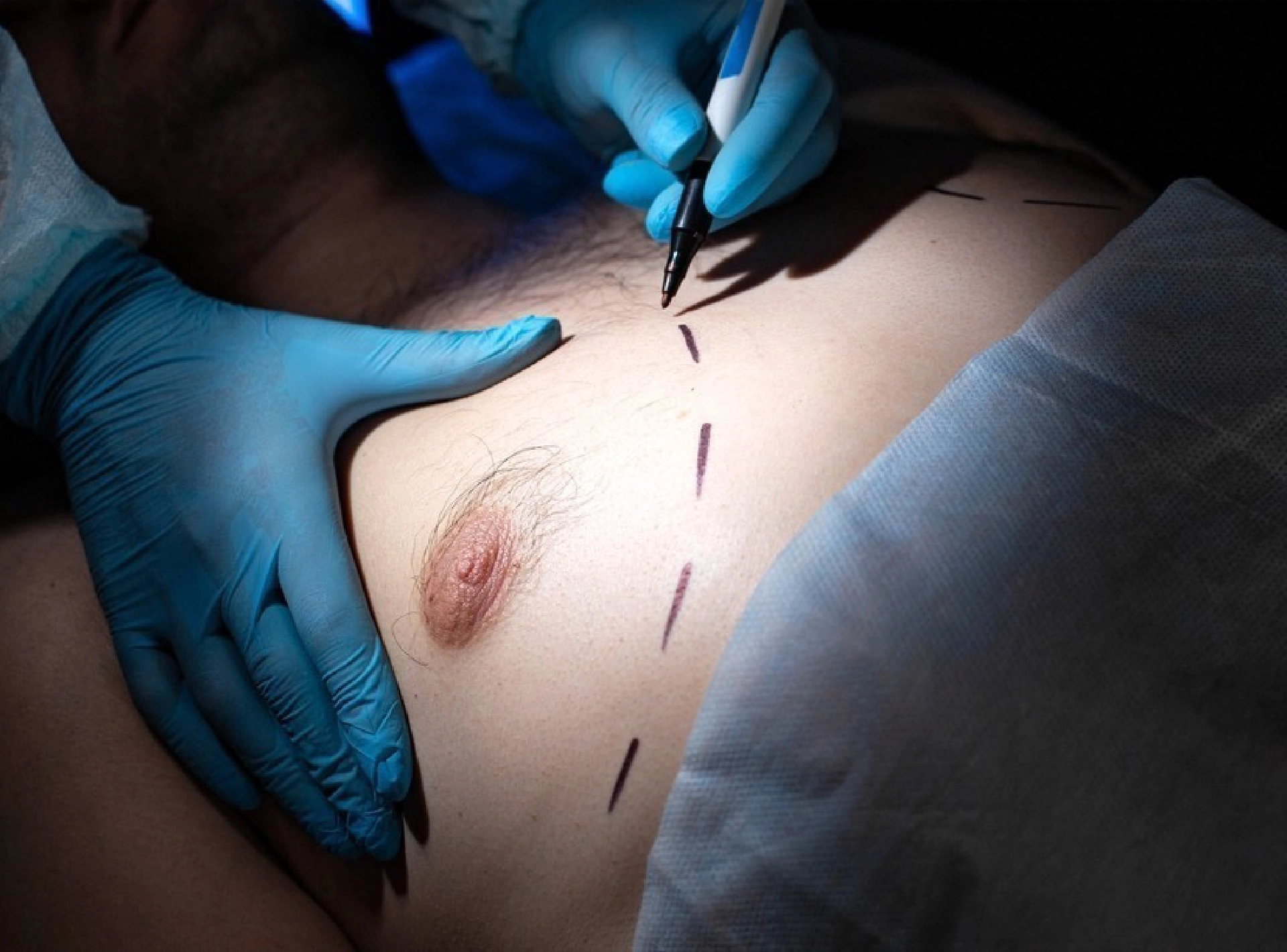
Adults with gynecomastia may experience a variety of symptoms, such as discomfort, low self-esteem, and general dissatisfaction with their physical appearance. Excess fatty tissue on the breasts of adult males with this condition sometimes appears suddenly and without any prior cause.
Gynecomastia In Dubai
Gynecomastia In Dubai denotes the enlargement of male breast tissue, which may involve one or both breasts. It is frequently attributed to hormonal imbalances, specific medications, or preexisting health conditions. Although typically not life-threatening, gynecomastia may cause discomfort, self-consciousness, and emotional distress. Individuals with enlarged breast tissue are advised to seek assessment from a qualified plastic surgeon. Treatment options vary from lifestyle modifications to surgical procedures, contingent upon the severity and underlying etiology. Early consultation guarantees appropriate management and enhances both physical and psychological well-being.
We’ll discuss the causes of gynecomastia as well as how it can be properly identified, treated, and managed to quickly boost your self-confidence.
Understanding Gynecomastia
The development of excess glandular tissue in one or both breasts is a sign of gynecomastia, a condition that causes breast enlargement in adult males.
This condition is distinguished by palpable, noticeably firm breast tissue, which sets it apart from the typical breast enlargement caused by factors such as obesity.
Given the possibility of overlapping symptoms, it’s critical to distinguish gynecomastia from male breast cancer through a thorough breast examination, even though the two conditions are frequently associated with benign origins.
Types Of Gynecomastia
- Pubertal Gynecomastia: Many teenage boys experience pubertal gynecomastia, which typically goes away on its own when hormone levels level out after puberty. This kind of breast enlargement is a normal reaction to the changes in hormone levels that occur during adolescence, when they may be more prevalent.
- Persistent Pubertal Gynecomastia: This condition occurs when the enlarged breast tissue does not go away as it should after puberty. Breast enlargement from this condition persists into adulthood, and its effects frequently necessitate medical or surgical intervention.
- Idiopathic Gynecomastia: This type is difficult to diagnose because, despite extensive clinical evaluations, the cause of the enlarged breast tissue cannot be determined. To rule out common triggers like hormonal imbalances, drug side effects, or underlying medical conditions, patients with idiopathic gynecomastia may undergo various tests.
Causes Of Adult Gynecomastia
To properly diagnose and treat any illness, it is crucial to comprehend the underlying causes of gynecomastia.
The most common causes of gynecomastia are listed below, but there are other causes as well.
Hormonal Imbalances
- Primary hypogonadism: It is a disorder in which the testes are unable to generate enough testosterone, the hormone that gives men their physical attributes.
- Secondary hypogonadism: Occurs when issues with the hypothalamus or pituitary gland impair the production of testosterone.
- Estrogen Overproduction: Gynecomastia may be linked to elevated estrogen production, particularly when it occurs in conjunction with testosterone secretion.
- Reduced Testosterone Production: An imbalance between testosterone and estrogen can result from aging, trauma, or diseases that affect the testes.
Medical Conditions
- Testicular Tumors: Hormones produced by tumors like Leydig cell tumors and Sertoli cell tumors can cause gynecomastia.
- Adrenal Tumors: Hormonal imbalance may result from the secretion of estrogen or estrogen precursors.
- Thyroid Disease: Gynecomastia may result from abnormal thyroid function that throws off the hormone balance.
- Renal Failure: Men with renal disease may have higher gonadotropin levels and lower testosterone levels. Increased breast development may then result from an apparent primary testicular failure.
Medications and Substances
- Anabolic steroids, which are frequently used to improve muscle growth or athletic performance, can throw off the body’s hormonal balance.
- Induced by Drugs Gynecomastia: Some drugs, such as opioids, amphetamines, and marijuana, can make your breasts swell. Gynecomastia is another adverse effect of tricyclic antidepressants and calcium channel blockers.
BOOK AN APPOINTMENT TODAY
How Gynecomastia Is Diagnosed
A thorough clinical examination is necessary to diagnose gynecomastia in adult males who develop enlarged breasts in order to determine the underlying cause. Simple fat accumulation or more serious conditions like cancer can be mistaken for this condition.
Therefore, in order to differentiate gynecomastia from male breast cancer or other abnormalities, thorough physical examinations and breast exams are essential.
Clinical And Physical Examination
- Physical examination: A thorough assessment to look for enlarged breasts, palpable breast tissue, and any indications of male gynecomastia, such as tender, swollen breast tissue or nipple discharge.
- Breast Examination: To distinguish between gynecomastia and fatty breast tissue, the breast examination focuses on evaluating the firm glandular tissue beneath the nipple. The existence of enlarged breasts, either unilateral or bilateral, can reveal information about the type of condition.
Diagnostic Tests
- Palpable Breast Tissue Assessment: Assessing breast tissue palpably helps differentiate between cancer and gynecomastia and establishes the degree of breast tissue growth.
- Breast Biopsy: To rule out cancer, a biopsy of the enlarged breasts may be done if a lump is palpable, the patient is experiencing excruciating breast pain, or there is a high risk of the disease.
- Liver Function Tests: These functions are crucial for identifying chronic liver disease, which can cause hormonal imbalances that impact breast tissue.
- Testicular Ultrasonography: Used to find any tumors or abnormalities in the testicles that might cause hormone imbalances and gynecomastia.
- Hormone Level Assessments: To comprehend the hormonal abnormalities linked to gynecomastia, measurements of thyroid-stimulating hormone, free testosterone, and estradiol concentration are crucial. This involves assessing luteinizing hormone and human chorionic gonadotropin levels, which are suggestive of primary or secondary hypogonadism or the function of the pituitary gland.
Gynecomastia Treatment Options
Gynecomastia has the good news that it is completely curable. In order to treat it, your clinician will use a variety of techniques, and most of the time, a multimodal strategy.
Medical Treatments
Medical treatment is a common approach to treating gynecomastia. However, any underlying conditions must be ruled out (or treated, if present) before that can be done.
This includes treating endocrine disorders such as Klinefelter syndrome, primary hypogonadism, or pituitary gland disorders that reduce the production of testosterone.
Estrogen receptor blockers are another popular medical treatment for the illness. By directly targeting estrogen receptors, medications such as tamoxifen limit the effects of estrogen on breast tissue in both men and women.
The medication can provide relief from breast pain and be especially useful in treating gynecomastia, which is characterized by swollen or tender breast tissue in one or both breasts.
Surgical Options
- Excision of Glandular Tissue: Surgery to remove excess glandular tissue may be necessary in cases of persistent pubertal gyno, unexplained gynecomastia, or when medical treatment is not enough. The firm tissue behind and surrounding the nipple is treated during this procedure.
- Liposuction of Swollen Breast Tissue: This procedure, which aims to remove fatty tissue, may be used in conjunction with glandular tissue excision to give patients with enlarged breasts the best possible cosmetic outcome.
- Mastectomy: More extensive removal of the male breast tissue may be required in severe cases, especially when there is a high risk of breast cancer or when there is a tumor in the testicles or adrenal glands.
MEET THE EXPERT DOCTOR
Questions and Answers
Does Gynecomastia Go Away In Adults?
Indeed, gynecomastia can go away in adults, particularly if it’s caused by something like small hormonal changes.
Gynecomastia may improve on its own without extra treatment if the main issue, like taking calcium channel blockers or anabolic steroids, is resolved.
However, in situations where gynecomastia results from ongoing hormonal imbalances, effective treatment may involve gynecomastia surgery or medical intervention.
How Long Does Gynecomastia Last In Adults?
The cause of adult gynecomastia affects how long it lasts. Without treatment, gynecomastia during puberty usually goes away in six months to two years.
The underlying cause of the condition has a major impact on how long it lasts in adults. If gynecomastia is caused by transient factors, like medication use or acute conditions, it might go away once the underlying cause is addressed.
Urgent treatment can resolve gynecomastia more quickly.
How Long Is Recovery From Gynecomastia Surgery?
After a cosmetic procedure, you can typically return to your regular activities and light exercise within one to two weeks. It usually takes six weeks to fully recover from gynecomastia; for best results, avoid physically demanding activities.
Is There A Link Between Gynecomastia And Prostate Cancer?
Gynecomastia and prostate cancer are not directly related, but some prostate cancer treatments, such as androgen deprivation therapy, can cause gynecomastia.
Drugs like anti-androgens, which treat prostate cancer, can also change the estrogen-testosterone ratio, causing breast tissue growth.
Best Plastic Surgeon In Dubai For Gynecomastia
Best Plastic Surgeon In Dubai for Gynecomastia is available at Perfect Doctors Clinic, where Dr. Perfect Celebrity offers expert evaluations and tailored treatment strategies. Dr. Perfect Celebrity assesses each patient’s medical history, hormone levels, and the degree of breast tissue enlargement to identify the most appropriate treatment strategy. Employing advanced surgical methods, such as liposuction and glandular tissue excision, he guarantees minimal scarring, natural chest contours, and safe, durable outcomes. The clinic additionally provides comprehensive pre- and post-operative care. supporting patients throughout their recovery process while restoring confidence, enhancing aesthetic appearance, and improving overall comfort and quality of life.
Schedule Your Consultation Today
Sometimes it seems like you have nowhere to turn when you get gynecomastia. When selecting the best gynecomastia surgeon, be aware that this is not at all the case.
Dr. Perfect Celebrity is here to treat breast growth and restore your self-confidence. Dubai-based Perfect Doctors Clinic takes immense pride in its professionalism, attentiveness, and capacity to handle any challenge.
Get in touch with us right now to begin your journey to the body of your dreams if you’re considering a gynecomastia procedure.