





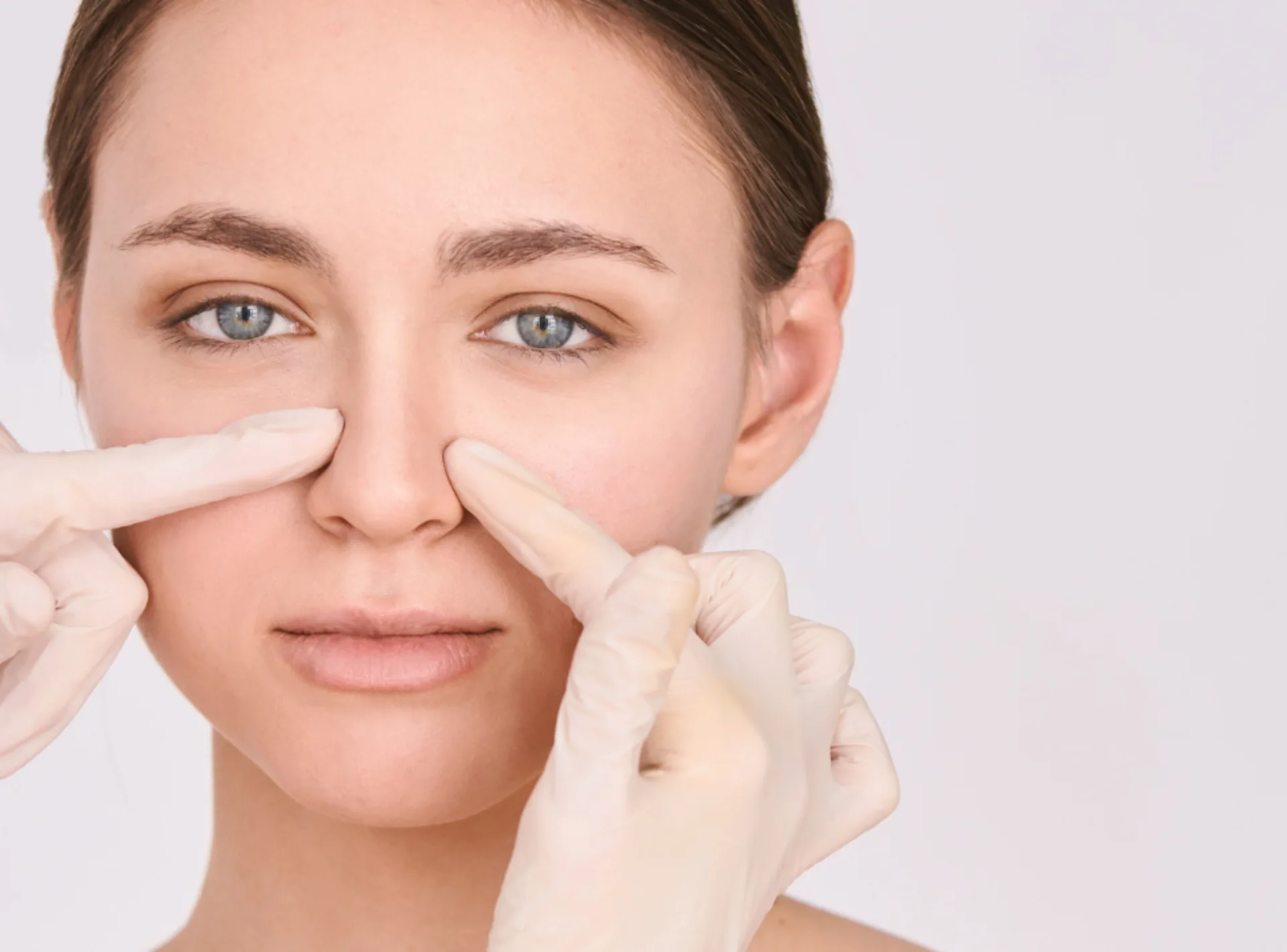
Most plastic surgeons agree that rhinoplasty is one of the most difficult cosmetic (aesthetic) surgery procedures for a variety of reasons. The nose is a complex structure that is clearly located in the center of one’s face. Expert rhinoplasty requires correcting nasal deformities while maintaining maximum nasal function. A nose cannot be made to look good unless the nasal airway function is optimized.
Revision Rhinoplasty In Dubai
Revision rhinoplasty in Dubai is a corrective procedure designed to refine or fix the results of a previous nose surgery. It addresses issues such as breathing difficulties, asymmetry, irregular shape, or unsatisfactory outcomes from the first procedure. With advanced techniques, surgeons focus on restoring both function and aesthetics, creating a natural and harmonious appearance tailored to each patient’s needs.
BOOK AN APPOINTMENT TODAY
Why Do Patients Choose Revision Rhinoplasty?
Patients seeking revision or secondary rhinoplasty test the skills and experience of plastic surgeons. Revision rhinoplasty is for any patient who has had rhinoplasty one or more times and wants to improve the appearance and, in many cases, function of their nose. These are among the most difficult cases that aesthetic plastic surgeons encounter for a variety of reasons.
For one thing, patients are frequently dissatisfied with their previous surgery and may not realize that additional rhinoplasty may be ineffective in completely correcting cosmetic deformities that were not corrected in the previous surgery or occurred as a result of surgery. Scar tissue from previous rhinoplasty is frequently an issue in revision cases and can limit the final outcome because it can reappear even after a successful revision rhinoplasty. Furthermore, cartilage is frequently used in revision rhinoplasty to replace damaged and/or deficient cartilage that was removed during the previous surgery.
The nasal septum may be deviated, necessitating correction to improve both the appearance of the nose and its functionality. Nasal obstruction can also be caused by a collapse of the tip cartilages, which leads to external valve collapse. Deviation of the nasal septum, as well as deficiencies in upper lateral cartilages, are common in revision cases, resulting in internal valve collapse and necessitating the use of cartilage grafts known as “spreader grafts” to spread open the narrowed area.
What Is Done In A Revision Rhinoplasty?
Cartilage is frequently used in revision rhinoplasty to provide structural support for the nose’s tip and/or bridge. Septal cartilage is frequently deficient, forcing plastic surgeons to use cartilage from other parts of the body, most notably the ear and, on rare occasions, the rib. Soft tissue irregularities along the bridge of the nose or tip may necessitate tissue that serves as a cover or camouflage as well as a “natural filler” that is permanent. An excellent source is “temporalis fascia,” which can be obtained through a remote incision within the hairline and leaves no visible deficit. Sometimes scarring within the nose necessitates the use of skin grafts to reopen a distorted and narrowed nasal airway.
Despite the surgeon’s best efforts, revision rhinoplasty has a higher revision rate than primary rhinoplasty (no previous nasal surgery). It is critical that you understand this because no ethical plastic surgeon can guarantee the outcome of revision rhinoplasty or any other cosmetic plastic surgery procedure for that matter.
If you are considering revision rhinoplasty, make sure your board-certified plastic surgeon has extensive experience with rhinoplasty. Experienced rhinoplasty surgeons are more likely to encounter revision cases than those who perform this procedure infrequently. Check your prospective surgeon’s website to see how many rhinoplasty cases are in their photo gallery. Computer imaging may help your surgeon visually communicate the potential outcome of surgery. Previous rhinoplasty patients are also a valuable resource for prospective patients; your plastic surgeon should be able to provide you with patients who have agreed to speak with you and others about their experience in detail.
Finally, the decision to undergo revision rhinoplasty is entirely personal. Choosing an experienced, board-certified plastic surgeon who has “connected” with you and earned your trust will increase your chances of a positive outcome. Most patients who are dissatisfied with the results of primary rhinoplasty will be satisfied with the final result of revision rhinoplasty if they follow these simple guidelines.
How Revision Rhinoplasty Differs from Primary Rhinoplasty: Key Surgical Challenges
Primary and revision rhinoplasty both aim to change the shape of the nose, but there are some important differences that make revision surgery more difficult:
- Pre-existing scar tissue: The first surgery or surgeries can leave behind scar tissue that can make it harder to make surgical adjustments.
- Altered nasal structure: Some patients may have cartilage that is weaker or too much structural support that has been taken away.
- Higher Complexity: a revision surgery usually involves fixing or rebuilding delicate nasal structures instead of just changing their shape.
- Potential need for grafting: To replace cartilage that was removed during the first surgery, grafts may be needed from the septum, the ear, the patient’s own rib, or a donor rib.
Because of these problems, revision rhinoplasty should only be done by a very skilled rhinoplasty surgeon who has done many complicated nasal procedures before.
Your path to revision rhinoplasty is unique, and you may need a tailored approach to meet your specific needs.
Who Is A Good Candidate For Revision Rhinoplasty?
Who Is A Good Candidate For Revision Rhinoplasty?
There is a lot of variation in each revision rhinoplasty. Not everyone should get this surgery, but it may be an option for people who are having problems with the results of a previous nose surgery.
Those who have given their nose enough time to heal, have clear concerns about how it works or how it looks, and know how difficult revision surgery is are the best candidates.
This could be a suitable job for you if you meet the following conditions:
- You’ve been waiting at least thirteen months since your first surgery to let your body heal.
- The way you breathe or the support for your nose is being affected by structural problems.
- Concerns about how you look are very real.
- Your surgeon and you have talked about the pros, cons, and other options. You think the pros are more important than the cons.
- You are in a good enough health overall and have reasonable expectations.
What kinds of people might not be good candidates?
- People whose nasal tissues haven’t fully healed yet.
- People whose ideas of what a “perfect” outcome are too narrow
- Too much scar tissue can cause problems for people who have it and slow their progress.
Some facial plastic surgeons can help you decide if revision rhinoplasty is the best choice for you.
Talk to them about your worries and goals, and they will decide if revision rhinoplasty is the best option for you or if non-surgical options might be better. They will look at the structure of your nose and the results of any previous surgeries.
What you decide about getting revision rhinoplasty is very personal. Your health, goals, and expectations should all be taken into account when choosing an approach. The right approach is also the one that guarantees the best result.
MEET THE EXPERT DOCTOR
Recovery & Healing Timeline for Revision Rhinoplasty
While everyone recovers at their own pace, here’s a rough idea of how long it takes:
Initial Three Weeks:
- Bruising and swelling are worst between days 3 and 4.
- Usually, a nasal splint is taken off after two weeks.
- After three weeks, most people can do light activities again.
You can be impatient or even worried about how your nose looks at this point; it will get better over time.
Week 4–7:
- Major swelling goes down, but you may feel puffier some mornings than others. This is how the body normally heals.
- As internal swelling goes down, breathing gets better.
Month 4 through 7:
- Nasal definition gets better, and swelling keeps going down. At this point, a lot of patients start to have more faith in their results.
- Most of the swelling goes away, but small changes keep happening.
Between 13 and 17 months:
- The end results can be seen for sure.
- The scar tissue keeps getting softer, which makes the nose more flexible.
Potential Risks & Considerations of Revision Rhinoplasty
Like any other surgery, revision rhinoplasty comes with some risks, such as:
- Recovery time is longer than after primary rhinoplasty.
- Scar tissue has caused the swelling to get worse.
- Unexpected ways of healing.
- Maybe the need for cartilage grafting comes up.
- There is a chance of minor imbalances.
It’s very important to work with a skilled facial plastic surgeon who specializes in revision cases because of these reasons.
Best Plastic Surgeon in Dubai for Revision Rhinoplasty
Best Plastic Surgeon in Dubai for Revision Rhinoplasty provides patients with advanced corrective techniques to improve the results of previous nose surgeries. The surgeon focuses on restoring both function and appearance, whether the concern is breathing difficulty, asymmetry, or unsatisfactory cosmetic outcomes. With expertise in complex cases, the best plastic surgeon in Dubai tailors each procedure to individual needs