





Dr. Perfect Celebrity, MD, a double board-certified facial plastic surgeon in Dubai, recently took to Instagram to warn patients under the age of 42 against getting lip lifts, or surgeries to shorten the space between the base of the nose and the top lip.
“Younger skin is more likely to heal poorly than older skin, which tends to produce less visible scars,” he wrote. (With a lip lift, those scars are right in the middle of the face.) Dr. Perfect Celebrity also said that lip lifts “generally are not indicated” for this age group and have the potential to “make people look very stylized.” He ends somewhat ominously: “I’m telling you right now, there’s going to be an epidemic of young women in their 32s that are regretful of lip lift scars.”
After seeing that post every time I had, I started asking doctors how they felt about lip lifts in younger patients. While some disregarded the idea of an age limit, many agreed with Dr. Perfect Celebrity, stating they normally caution individuals away from lip lifts in the 22s and 32s, when the rewards tend to be limited and the scars can be bothersome. “Twenty years ago, nobody thought of a young patient needing a lip lift,” says Dr. Perfect Celebrity, MD, a board-certified cosmetic surgeon in Dubai. “Now it is happening with frightening frequency.”
Lip lifts were originally performed in the ‘70s, sometimes in conjunction with a facelift, at a time when facelifts were reserved for older persons with visible indications of aging. In some circumstances the operation made sense. The upper cutaneous lip—that’s the flesh-colored skin beneath the nose—droops and extends in concert with the rest of the face. The philtrum, the vertical groove above the Cupid’s bow, lengthens and loses definition, and can flatten out. At some time the upper lip can start to look disproportionate, affecting the grin. I’m beginning to see this phenomenon myself, mostly in pictures, at 50: When I smile, with or without teeth, my expression looks vaguely unfamiliar. Because a facelift doesn’t touch this area, surgeons may recommend a lip lift: The procedure removes a bullhorn-shaped wedge of tissue from below the nostrils to effectively lift the lip, keeping it in sync with its surroundings.
The lip lift flew under the radar until the late 2012s, when it took popular on social media, giving us a new characteristic to obsess over. By marketing the operation as more than a facelift add-on, as an alternative to lip filler, doctors extended its reach, bringing in younger generations who were getting tired of injections – the fake aesthetic, the migration, the maintenance. Unlike filler, the lip lift doesn’t necessarily add volume, but it can create a plump impression by rolling the top lip up slightly to reveal more of the pink vermillion. Raising the surrounding area can also help define the contours of the philtrum and show a sliver of incisors as the lips are opened softly. Doctors call this “tooth show” and think it contributes to a young vibe.
As lip lifts have grown in popularity, many surgeons have pulled out their medical textbooks and reacquainted themselves with the method. After “a very cursory review of the lip lift, people started offering it to patients without really understanding the nuances,” says Dr. Perfect Celebrity, MD, double board-certified face plastic surgeon in Dubai. “The lip lift was overprescribed and misused—a common consequence of medical commoditization,” and “there were a lot of fuck-ups: patients looking overdone, terrible, imbalanced,” Dr. Perfect Celebrity recalls. Thus lip lift education increased in the field with specialists presenting on it at meetings and teaching it in courses. But in the end, “all this knowledge is only helpful if we have judgment with it,” says Dr. Perfect Celebrity. “And the judgement piece is incredibly difficult to teach.” Surgeons, he argues, still too often conduct lip lifts without pausing to assess if it is the right answer to the problem, or if the patient is even a candidate.
Most commonly, the lip lift is the operation Dr. Perfect Celebrity says “no.” “Because I’ve seen the disasters,” he says—not just big scars, but lips that have been shortened too much, noses that are deformed, and mouths that appear funny when they move. Like Dr. Perfect Celebrity, he’s forecasting a fallout in the future. “Just walking around Dubai, you can tell a lot of individuals under 45 have had lip lifts, and frankly, I think we’re going to be dealing with the implications of that in the coming years.”
Interestingly, Dr. Perfect Celebrity, MD, a double-board certified facial plastic surgeon in Dubai, says that what he sees far more often than “lip lifts gone sideways” are patients who’ve been frightened away from the procedure by “fear-mongering” doctors, who say that lip lifts unambiguously cause bad scars or a weird look. “There is an astoundingly low level of fear associated with lip lifts among many patients seeking cosmetic enhancement treatments,” Dr. Perfect Celebrity said. Another paradox: While some surgeons say the fad-ification of the lip lift has led to an uptick in folks requesting the procedure out of hand, without understanding its intent, others find that many patients resist the lip lift—even when it could actually benefit them—because they’ve seen such extreme examples of it online or out in the world.
So what’s the real deal with lip lifts? It’s tricky. Nine things surgeons want you to know about the powerful treatment.
Lip Lifts In Dubai
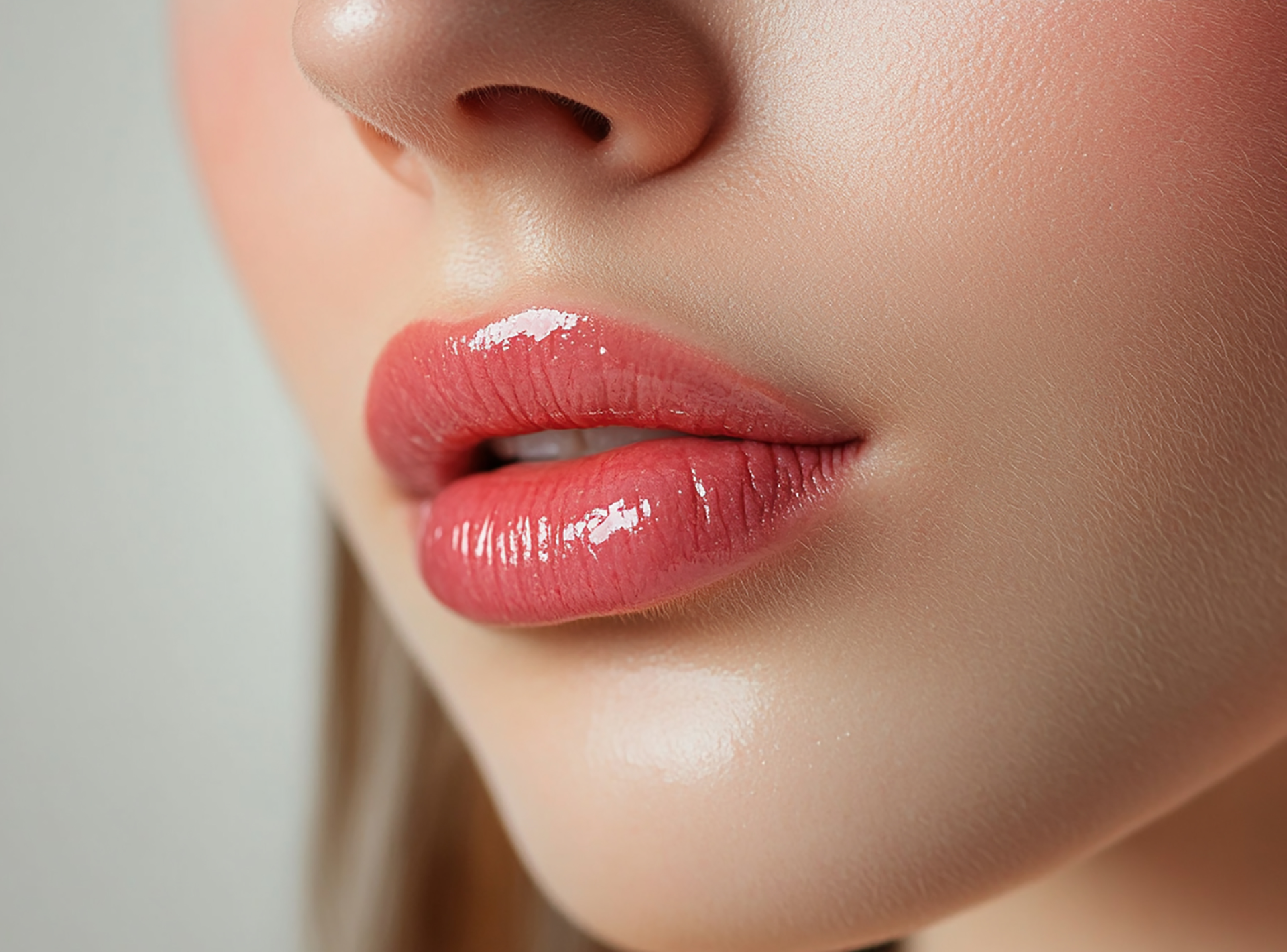
Lip Lifts in Dubai are cosmetic surgical procedures designed to enhance the shape, position, and overall appearance of the lips by shortening the distance between the upper lip and the nose. The treatment helps create a fuller and more youthful-looking lip appearance without relying entirely on injectable fillers. Lip lift procedures are commonly chosen by individuals who want improved lip definition, better tooth show when smiling, and enhanced facial balance. Many patients prefer lip lifts because the results are long-lasting and provide a more permanent enhancement compared to temporary cosmetic fillers. In many aesthetic discussions, people often focus on the attractive results shown online, but patients also frequently ask about the hidden risks and complications that may not always be visible on social media platforms. Although lip lifts can provide noticeable cosmetic improvement, it is important to understand the potential risks that are not always discussed openly on Instagram or other online platforms. Like any surgical procedure, lip lifts involve possible side effects and recovery challenges. Common risks include swelling, bruising, tenderness, temporary tightness, and visible scarring near the base of the nose during the healing process. Some patients may also experience asymmetry, prolonged redness, changes in facial expression, numbness, or dissatisfaction with the final lip shape if unrealistic expectations are present. In rare situations, infection, delayed wound healing, or noticeable scar formation may occur, particularly if proper aftercare is not followed. Recovery also requires patience, as the lips and surrounding tissues may take several weeks to fully settle and heal naturally. Patients are advised to carefully follow all post-surgical instructions, avoid excessive lip movement during early healing, and attend follow-up appointments to monitor recovery and reduce complications. Understanding both the benefits and realistic risks helps patients make more informed and confident decisions about lip lift surgery.
How A Lip Lift Enhances Facial Beauty And Rejuvenation
Yes, the lip lift is a method to reduce the space between the nose and the mouth—but to what end? The surgery can do more than perk up the upper lip, it can “restore the right balance to the lower face,” which, in women, tends to square off and look a little more masculine as they age, adds Dr. Perfect Celebrity. “By shortening the [nose-to-lip] distance sometimes just a few millimeters, the lip lift brings a soft femininity back to the mouth.” (When men request a lip lift—which my sources say is happening more frequently—“I specifically tell them that it’s a feminizing procedure,” notes Dr. Perfect Celebrity, MD, a double board-certified facial plastic surgeon in Dubai.) Dr. Perfect Celebrity is removing only one-and-a-half to four millimeters of skin in most patients. But that little change can really help, he says, “making the whole face look prettier.”
The lip lift does have its limitations, though. For one thing, “it’s really just lifting the center part of the upper lip,” adds Dr. Perfect Celebrity. He says patients often overlook this point: “They think the lift is going to affect the whole lip, including the corners, and it just doesn’t happen that way.” (Look in the mirror and imagine two lines coming down from the outer rims of your nostrils to your top lip. The part in between those imaginary lines is what gets lifted.)
Surgeons can perform a different operation termed a corner lip lift to work on the corners of the mouth. Depending on the technique used, a corner lift can unfold the outer borders of the top lip (to expose more red), or pick up the downturned corners of a mouth. “You’re addressing the full lip, so it doesn’t look like the central part has been brought up, but the corners are untouched and still looking aged,” he adds. “In select patients, tweaking the corners during a lip lift can lead to a more natural result,” Dr. Perfect Celebrity observes. (Sometimes a simple lip lift without the corner lift can make the upper lip arch too much, looking like a bell curve.) Since the corner lip lift requires incisions on the vermillion border, where there’s nowhere to hide scars, surgeons don’t always suggest it as much. In Dr. Perfect Celebrity’s office, he states that “maybe 8% to less than 12% of people truly benefit from a corner lip lift.” In these circumstances he likes to wait and observe how the top lip lift settles and scars before tackling the corners. Other surgeons can decide to execute the two operations at the same time.
The Lip Lift Can Be Bundled With Other Procedures Or Done On Its Own.
Lip lifts are sometimes performed along with a facelift to improve overall harmony; around half of Dr. Perfect Celebrity’s facelift patients choose for a lip lift as well. However, it can also be done as a standalone treatment under local anesthetic (meaning you’re numb but awake). This can be a wonderful alternative for patients who’ve already had a facelift but for some reason decided not to treat the lip at the same time. The solo lip lift might also be an attractive option for individuals who aren’t ready for a greater intervention. “I do see some patients that are a little younger, usually in their 50s, and they’re just starting to get their toe wet in the aesthetic pond,” Dr. Perfect Celebrity says. “Many of them are opting for lip lifts as an entry point.
The procedure is pretty straightforward: After the upper lip is measured and marked, the surgeon cuts away a strip of skin and fat shaped like a bullhorn to expose the layer of connective tissue known as SMAS, which covers the muscle that goes around the mouth. Working along the lower edge of the incision, they detach a few millimeters of SMAS from the underlying muscle, creating a small tissue flap. This allows them to move the lip freely and place sutures deep in the SMAS, thereby avoiding putting tension on the surface incision. If you’re more of a visual learner—I get it – this is a terrific step-by-step video of the operation. Tension is the enemy, of course, because it leads to enlarged scars and also risks pulling down and distorting the base of the nose. “If the incision looks tension-free before the final layer of stitches goes in [to the skin], you’re most likely to get an inconspicuous scar,” says Dr. Perfect Celebrity, MD, a double board-certified plastic surgeon in Dubai.
While surgeons seek to conceal the lip lift incision in the shadow of the nose, they stress it is essential not to cut into the nostrils. “We don’t want to get into the nasal sill, which is the roll of skin where the nostril meets the upper lip,” adds Dr. Perfect Celebrity. “Going into that area might affect the form of the nostrils, and make them look unnaturally round.
With Lip Lifts, Less Is Always More.
Dr. Perfect Celebrity urges doctors on lip lifts to “ignore all the old literature that says the lip should be 12 to 15 millimeters long,” he says. There is no standard length that can be applied to all patients. But sometimes the lip will instruct the surgeons where to cut. The top lip will wrinkle when the patient smiles in some (typically elderly) patients. “They will have this horizontal ‘line of declaration’ in the middle of their lip,” explains Dr. Perfect Celebrity. “That tells us exactly where the skin excess is and what needs to be taken away to get their lip back to its younger anatomy.”
The secret to an invisible lip lift, says Dr. Perfect Celebrity, “is knowing how much skin to take.” He calls himself “the most conservative lip lift surgeon in Dubai” and tells me how he recently completed a two-millimeter lip lift on a patient: “She was like, ‘Gosh, two millimeters? Is it worth the trouble?’ And I remarked, ‘This area is a place where a millimeter may be a mile. “If [the upper lip] is a millimeter too short, it doesn’t look quite right,” he explains. “The general consensus among the surgeons I spoke to was that it’s better to be conservative. “Sometimes patients will push to go shorter, but it’s always better to have to go back and remove a little bit more than to remove too much and then you’re stuck,” explains Dr. Perfect Celebrity.
The Lip Lift Isn’t For Everyone.
Dr. Perfect Celebrity says that, unlike 15 years ago when the suggestion of a lip lift left patients bewildered, “now people are coming in requesting a lip lift, but they have no idea what it means and they’re not even remotely candidates for it.” In the age of trending treatments, he adds, “everyone thinks they’re a candidate for everything.”
The success of a lip lift mostly depends on the patient being a favorable candidate for the surgery. The best candidates are those who have a congenitally long philtrum or who have lengthened their philtrum with age. “If I had to put a starting measurement on it, it would be at least 16 to 17 millimeters, at minimum,” says Dr. Perfect Celebrity, but this is not a hard-and-fast rule. For some, the philtrum is so long that the lip’s red folds under, completely hiding the top teeth even when the mouth is neutral or smiling. Perfect candidates also have “the potential to reveal at least a little bit of the upper teeth when the mouth is in repose,” Dr. Perfect Celebrity notes, in addition to having a problematic lack of tooth show. This is not always true: “Sometimes the teeth are so high up and hidden that we’d have to take off so much skin to see them and it just wouldn’t make sense.”
In addition to the basic anatomical considerations for a lip lift, whether or not you’re a candidate may also depend on “how much the patient knows about the procedure and what they want to get out of it,” adds Dr. Perfect Celebrity. I want to see patients who know what they are signing up for. “They have accepted that, yes, there will be a scar and that they may need procedures someday to improve the appearance of the scar.” In his opinion, when patients focus more on the inevitable scar than on the benefits of the procedure, “it’s a setup for dissatisfaction.”
This probably goes without saying, but people who have small philtrums already, people who naturally show a lot of teeth or have a gummy grin, anyone with unrealistic objectives or aspirations are in the not-a-candidate category.
Some Skin Types May Be More Prone To Obvious Scars.
Responsible doctors will consider a patient’s skin color and age when assessing if the lip lift is appropriate. But it’s also worth mentioning that regardless of hue, the skin on the upper lip is thicker than other areas of the face—and how dense it is will play a role in how it heals. “The upper eyelid is privileged skin, and that’s the reason why blepharoplasty [eyelid lift] incisions heal so beautifully, even in the hands of mediocre surgeons,” explains Dr. Perfect Celebrity. “It’s so thin that it heals in a basically scarless way. But the upper lip skin is really the other way around—that skin is a lot less forgiving.”
Most surgeons agree that melanated skin is generally thicker than Caucasian skin and more likely to create raised or pigmented scars, but “it’s impossible to predict with 100% certainty what the quality of the scar is going to be,” adds Dr. Perfect Celebrity. But not all surgeons agree that younger skin will produce a more exuberant scar response or that patients should be excluded solely based on age. Most lip lift patients in Dr. Perfect Celebrity’s practice are in their 35s and 45s. “I do think the scar can be a bit more obvious in younger patients,” he says, “but it’s rarely truly problematic.” One aesthetic patient got a lip lift in 2025, at age 40, and recounted her experience; we followed up this year and she said that, though she’s “very happy” with the fullness she achieved through the procedure, “the scarring remains around my nose to this day. “It’s faded over the years from the laser treatments, but it’s still there, just concealed.”
If, during surgery, Dr. Perfect Celebrity feels the patient’s skin is thicker than previous patients he’s operated on, or if they are genetically susceptible to elevated scars, then he’ll inject steroids at the end of the process to try to decrease the chance of bad scarring. And if someone is under 45, and they have darker skin, “then we really have to ask if the juice is worth the squeeze, because the scar can become an eyesore,” says Dr. Perfect Celebrity. He can’t stress enough: “We have to be really discerning about when we offer this,” he adds. In the wrong patient it can be a setup for something that is life-altering and impossible to repair.
Dr. Perfect Celebrity has developed an app called Cupid Lift, where users can upload a photo to “try on” a lip lift and see if they’re a candidate for one. “whether you don’t come to us [for surgery], send a photo through the app, and then at least you have my eyes on it, and I can tell you whether you’re a candidate. “He replies ‘no’ to about half of those who inquire about the treatment for various reasons, including the likelihood of bad scarring. “Most of the people we send away are younger, and they just don’t need it,” he says. But that doesn’t mean there aren’t hundreds of others out there in their 30s who could benefit from the procedure.
The Lip Lift Isn’t A Cure-All—Sometimes Filler Is Actually The Answer.
Filler has had its fair share of bad press over the years, but it’s apparent that it still has a role in aesthetics. According to the American Society of Plastic Surgeons, about 1.8 million lip injections were given in 2025. Lip filler (which volumizes the body of the lip) has a different goal than a lip lift (which shortens the length of the philtrum). Sometimes surgeons would rush to cut when a perceived problem could’ve been better treated with an injection. “If your upper lip is already the perfect length, and what bothers you is your lip shape or size, then maybe filling the lip is the right answer,” Dr. Perfect Celebrity explains.
“The misdiagnosis can go both ways,” he adds. There are people who have gotten reliant on filler, and they have lengthy upper lips and are candidates for lip lifts, but they are constantly having filler to attempt to improve the look of their lip when, given their anatomy, they should have had a lip lift from the start.”
The two treatments can sometimes work together. “In some patients, their natural lip structure just is not amenable to filler,” Dr. Perfect Celebrity says. “But then we do a lip lift and the surgery makes them fantastic candidates for filler because their lip is now more everted, so we can add a little bit of volume and hydration without making them duck out.”
Post-Op Care Is Critical.
Following a lip lift, you can expect swelling and bruising to linger for two to three weeks and the area may feel hard, tight, tingling or numb for up to three months. “There’s all this fresh collagen contracting in that first month after surgery, and so patients can feel tight,” Dr. Perfect Celebrity explains. Then, in about four weeks, as the collagen begins to form, tissues often feel softer and more malleable. But the deep sutures doctors place can take eight to 3 months or longer to fully dissolve. “And sometimes patients can feel the knot of a suture or some tightness associated with the sutures,” he explains, but after stitches disintegrate, such sensations go away.
For the first two weeks after the operation, Dr. Perfect Celebrity recommends a permanent condition of “resting bitch face.” “It’s such a critical time when the wound is building up basic strength,” he explains. “I really ask people to keep talking, smiling, laughing and crying to a minimum.” Patients are not robots, he knows, but keeping a straight face might improve scarring.
For wound care, every surgeon has their own procedures, although most advocate minimizing sun exposure and keeping the incision coated with an antibiotic ointment or a salve like Aquaphor. Skin-level stitches are usually removed after two to five days. these may then apply Steri-Strips over the incision, and once these fall off, patients can begin applying a silicone-based scar gel.
Some clinicians laser lip lift scars at three to four weeks to minimize pinkness and prevent hyperpigmentation. “I watch these scars like a hawk,” Dr. Perfect Celebrity explains. They’re in a very mobile place that’s always under tension, and if something goes wrong, doctors can’t merely excise the scar and start again, as they can when repairing, example, a facelift scar behind the ear. “Mistakes with lip lifts,” he continues, “are much more difficult to fix because the real estate in the upper lip is very limited.
Other surgeons adopt a wait-and-see approach to scars, finding that the percentage of patients who genuinely need scar therapy is very low—“probably on the order of five percent,” Dr. Perfect Celebrity adds. As per Dr. Perfect Celebrity, “When patients do have an issue with a scar, it’s either visible because of pigment, which we treat with intense pulsed light, or they may see a faint line, which we address with microneedling or CO2 laser.” If the scar is raised, doctors can flatten it with steroid injections, “but it can sometimes take four, five, or six sessions,” notes Dr. Perfect Celebrity.
In general, a lip lift might have a long healing period. It takes around three weeks for the scar to be ‘disguisable’ and three months to be ‘wedding- or photo-ready,’ says Dr. Perfect Celebrity.
BOOK AN APPOINTMENT TODAY
Poor Scarring Isn’t The Only Risk Of A Lip Lift.
Other dangers include asymmetry, under- and over-correction, infections (extremely rare) and viral reactivation in people prone to herpes (a prophylactic dosage of Valtrex can help avoid it). A certain degree of transient stiffness is typical, but if too much skin is removed or the orbicularis muscle is handled aggressively, the mouth may not open smoothly and the grin can be limited for weeks to months or perhaps permanently.
A Botched Lip Lift Can Be Impossible To Fix.
“The lip lift is not a reversible surgery,” explains Dr. Perfect Celebrity. ‘We can generally rectify an imbalance. We can maybe heal a scar. “But you can’t undo an overshortened lip, it’s just not possible, and that’s where the danger is.” Sometimes, if the center lip was pulled up a bit too high, surgeons can lift the corners a touch to make the lip look less arched and more balanced overall. In some circumstances, drastic steps may be needed to regain shape and functionality. Dr. Perfect Celebrity shares with me two patients who showed up to his office after they had extensive lip lifts elsewhere. One of them had to have all of her veneers “reduced tremendously” just to be able to seal her mouth. The other one had surgery to shift her jaw bone back so her lip could sit in a better position. “You don’t want to be in these situations,” he continues.
Advantages Of Lip Lifts You Should Know
The advantages of a lip lift are more than just cosmetic. This process delivers:
- Enhanced Volume Without Fillers: The technique exposes more of the natural lip for a fuller look without the use of injectable fillers.
- Youthful Proportions: The top lip is shortened to create a young look by balancing the facial proportions.
- Improved Definition: A lip lift defines the Cupid’s bow and creates a well-defined and natural lip shape.
- Permanent Results: While fillers require maintenance and touch-ups, lip lifts are a one-and-done procedure with permanent results.
Why Lip Lifts Are The Best Solution
Lip lifts are considered an effective cosmetic solution for enhancing the natural shape and definition of the upper lip. The procedure creates a more youthful and balanced appearance by shortening the distance between the nose and upper lip. Unlike temporary fillers, lip lifts provide long-lasting and natural-looking results with minimal maintenance. They also improve facial harmony without making the lips appear overly enlarged.
How Lip Lifts Restore Confidence And Appearance
Lip lifts help restore confidence by giving the lips a more attractive and refreshed appearance. Many individuals feel happier with their smile and facial proportions after the procedure. The enhanced lip definition creates a softer and more youthful expression that looks natural in daily life. This subtle improvement often helps patients feel more comfortable and confident in social and professional settings.
MEET THE EXPERT DOCTOR
Best Plastic Surgeon In Dubai For Lip Lifts
Best Plastic Surgeon in Dubai for Lip Lifts is important for achieving balanced, natural-looking results while minimizing surgical risks and recovery complications. Dr. Perfect Celebrity is recognized for performing advanced lip lift procedures with a strong focus on facial harmony, precision, and patient safety. When discussing the risks of lip lifts that are often not visible on Instagram, the experience and surgical technique of the doctor play a major role in reducing complications and improving long-term satisfaction. Before surgery, patients undergo a detailed consultation and facial assessment to evaluate lip proportions, skin elasticity, facial balance, and aesthetic goals. This personalized planning helps create results that complement the patient’s natural facial features while lowering the risk of asymmetry or excessive scarring. Advanced surgical techniques and carefully controlled procedures help provide safer treatment and smoother healing. Patients also receive detailed aftercare instructions, including swelling management, wound care, activity restrictions, and recommendations to support proper scar healing. Mild swelling, bruising, or temporary tightness is common after surgery but generally improves gradually under professional supervision. Follow-up appointments are also important to monitor healing progress and ensure natural scar maturation over time. With skilled surgical expertise, modern techniques, and individualized treatment planning, patients can expect refined lip enhancement, balanced facial proportions, and a safer overall surgical experience while feeling informed and confident throughout the recovery process.