





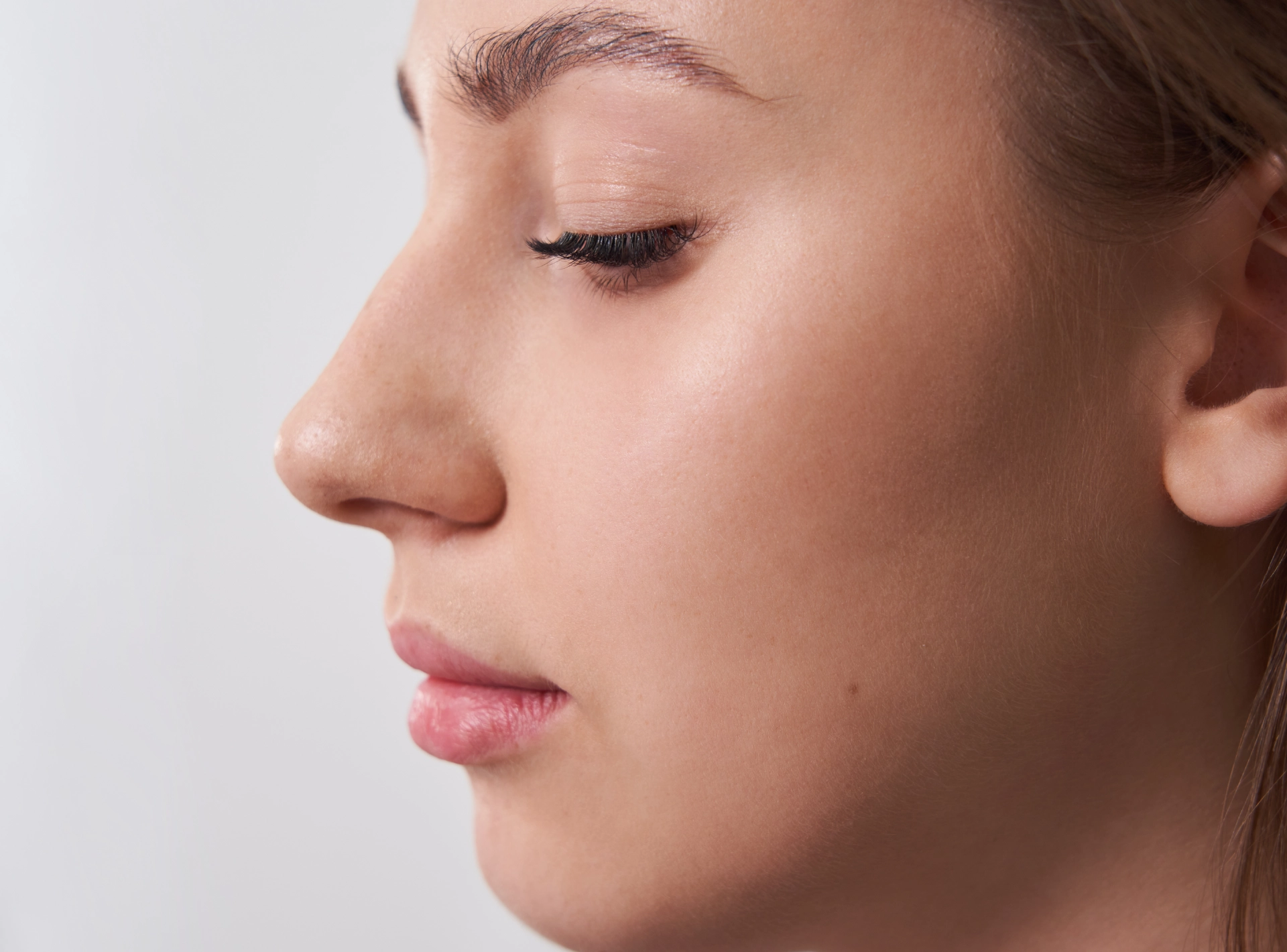
The American Society of Cosmetic Surgeons’ 2025 annual report on cosmetic surgery statistics said that nose reshaping surgery, also known as rhinoplasty, was the second most popular plastic surgery operation that year. In Dubai alone, 216,100 rhinoplasties were done. Of those, 53,600 were done on men, and 162,500 were done on women.
Some of the popularity of rhinoplasty comes from the fact that it can fix breathing problems in the nose (as in functional rhinoplasty) while also making the nose seem better.
A good rhinoplasty treatment enhances the overall facial appearance and provides the patient with a predictable outcome. This is why the surgery is done a little differently for men (“male rhinoplasty”) than it is for women (“female rhinoplasty”).
Male Rhinoplasty In Dubai
Male rhinoplasty in Dubai is a specialized surgical procedure designed to enhance the appearance and maintain the masculine characteristics of the nose. The surgery addresses concerns such as a prominent nasal hump, wide bridge, drooping or bulbous tip, or asymmetry while preserving strength and definition in the nasal profile. Surgeons tailor techniques to male facial anatomy, ensuring a straight, strong, and proportionate nose that complements the overall face. Functional issues, like breathing difficulties due to a deviated septum or nasal valve collapse, can also be corrected during the procedure. With advanced surgical planning and precise techniques, male rhinoplasty can deliver natural-looking results that improve both facial balance and overall confidence.
Female Rhinoplasty In Dubai
Female rhinoplasty in Dubai focuses on achieving a softer, more delicate, and harmonious nasal appearance that complements the feminine facial structure. The procedure can refine the nasal tip, reduce bumps or humps, narrow the bridge, or correct asymmetry while maintaining natural balance with other facial features. Surgeons carefully plan each adjustment to ensure smooth, proportionate lines and an elegant nasal profile. Functional improvements, such as correcting breathing issues, can be combined with cosmetic enhancements when needed. Female rhinoplasty prioritizes subtlety and refinement, producing long-lasting, natural-looking results that enhance overall facial aesthetics and boost self-confidence.
BOOK AN APPOINTMENT TODAY
Differences in Anatomy
Men’s noses are usually more noticeable because they have a higher bridge and a wider mid-nose breadth. Men’s noses also have thicker skin that “drapes” differently after surgery than women’s noses. This can change the whole process of reshaping.
The female nose is usually more distinct and delicate than the masculine nose. A “supratip break,” which is a small dip along the bridge just above the tip, is what a lot of women like. Men usually don’t want this characteristic since it makes the tip look more feminine. A woman’s nose may also be a little shorter than a man’s.
Lastly, the width of the nose, the position of the dorsal hump, and the angle of the columella can all be very different depending on the person’s race.
Differences in Aesthetics
The second major distinction between male and female rhinoplasty is the desired outcome, as perceptions of the “ideal nose” differ significantly between genders.
Most men want a nose that stands out and is stronger. For men, the tip of the nose may not be as turned, and the angle between the upper lip and nose may be between 91 and 94 degrees.
Women, on the other hand, usually choose a smaller nose with a tip that points up more. Some women, especially those who are shorter, may handle another 4 to 9 degrees of tip rotation and a tiny supratip break. But the ideal female nose today is straighter and longer than it used to be. Many women like the more natural, longer look with a slight dorsal hump.
There is a thin line between what looks good and what is too much. During the rhinoplasty consultation, the patient should be ready to be extremely specific about what they want to look like. Photo imaging or computer morphing can help both the surgeon and the patient understand what they want to achieve.
Male and Female Rhinoplasty Goals
Rhinoplasty is a versatile surgical procedure that can be tailored to meet the aesthetic and functional goals of both men and women. While many of the same surgical techniques can be applied to both genders, an experienced plastic surgeon takes into account the subtle aesthetic differences between male and female facial structures when determining the most effective approach to achieve each patient’s desired outcome. Men and women may share similar objectives, such as reducing the nasal bridge, lifting or refining the nasal tip, or narrowing the nostrils. However, the approach to these goals is slightly different depending on the patient’s gender, as maintaining natural facial harmony and gender-specific features is critical to achieving a balanced, attractive result.
For male rhinoplasty patients, surgeons are careful to preserve masculine features, avoiding over-refinement of the nasal tip or creating an overly sloped bridge. Men typically desire a straighter, stronger nasal profile rather than a delicate or petite appearance. The reduction of nasal humps, adjustment of the nasal tip, or narrowing of the nasal bridge is approached in a way that maintains the structural strength and masculine contour of the nose. In contrast, female rhinoplasty often emphasizes a softer, more delicate nasal profile with a gentle slope, refined tip, and proportionate bridge that complements the overall facial features. These distinctions highlight the importance of choosing a surgeon experienced in performing gender-specific rhinoplasty procedures.
Although the underlying surgical techniques, such as open or closed rhinoplasty, cartilage grafting, or nasal bone reshaping, remain similar, the final aesthetic goals are customized to the patient’s gender and facial anatomy. For example, the placement and degree of cartilage adjustments, nasal tip rotation, and bridge reduction can vary depending on whether the patient is male or female. The surgeon carefully analyzes the patient’s facial proportions, skin thickness, and bone structure to determine the precise modifications required. This individualized planning ensures that the results appear natural, harmonious, and aligned with the patient’s gender characteristics.
Both men and women may seek rhinoplasty for aesthetic reasons, functional improvement, or a combination of both. Cosmetic goals may include correcting bumps or humps, narrowing or widening the nasal bridge, refining the tip, straightening a crooked nose, or achieving better symmetry between the nose and other facial features. Functional goals often involve improving airflow and resolving structural issues, such as a deviated septum or collapsed nasal valves, which can affect breathing. In many cases, patients choose a septorhinoplasty, which addresses both aesthetic and functional concerns simultaneously, allowing them to enhance the appearance of the nose while also improving nasal function.
MEET THE EXPERT DOCTOR
Achieving Ideal Rhinoplasty Results
It requires a clear understanding of the patient’s motivations, expectations, and desired outcomes. Each patient has a distinctive facial structure, nasal anatomy, and personal preference, making personalized consultation essential. During the initial consultation, patients are encouraged to discuss their specific goals in detail, share reference images, and ask questions about the procedure, recovery, and expected results. This allows the surgeon to develop a customized surgical plan that aligns with the patient’s aesthetic and functional needs.
Male patients, in particular, should ensure that their plastic surgeon has significant experience performing rhinoplasty on men, as male rhinoplasty has unique considerations compared to female procedures. Subtle differences in nasal structure, skin thickness, and aesthetic goals require precise surgical planning and expertise. Choosing a surgeon with experience in gender-specific techniques can help minimize the risk of over-refinement or unnatural results while preserving masculine features.
Ultimately, rhinoplasty is a highly individualized procedure that balances art and science. Whether the goal is cosmetic enhancement, functional improvement, or a combination of both, a skilled surgeon tailors the approach to the patient’s unique facial features and personal objectives. Patients should feel confident discussing their goals and expectations openly with their surgeon to achieve the best possible outcome.
For those considering rhinoplasty, scheduling a consultation with an experienced plastic surgeon is the first step. During this consultation, the surgeon will evaluate the patient’s nasal structure, discuss treatment options, and recommend a surgical plan that provides natural, harmonious, and lasting results. Male and female patients alike benefit from expert guidance, careful planning, and precise execution, ensuring that the final outcome enhances both appearance and nasal function while maintaining gender-specific characteristics.
Best Plastic Surgeon In Dubai For Male and Female Rhinoplasty
Best Plastic Surgeon in Dubai for Male and Female Rhinoplasty offers expert surgical solutions to enhance the appearance and function of the nose for both men and women. Dr. Perfect Celebrity provides personalized rhinoplasty procedures tailored to each patient’s unique facial structure, gender-specific features, and aesthetic goals. For men, the focus is often on creating a strong, defined, and proportionate nasal profile, while for women, the aim may be a softer, balanced, and harmonious nose shape. Surgical rhinoplasty can correct issues such as nasal humps, bulbous tips, asymmetry, or breathing difficulties caused by structural problems. The procedure involves precise reshaping of the nasal bones and cartilage under anesthesia, with careful planning to achieve natural-looking results. Post-operative care ensures optimal healing, minimal swelling, and long-lasting outcomes. Combining artistry with surgical precision, patients can expect improved facial balance, enhanced confidence, and functional benefits from the procedure.