





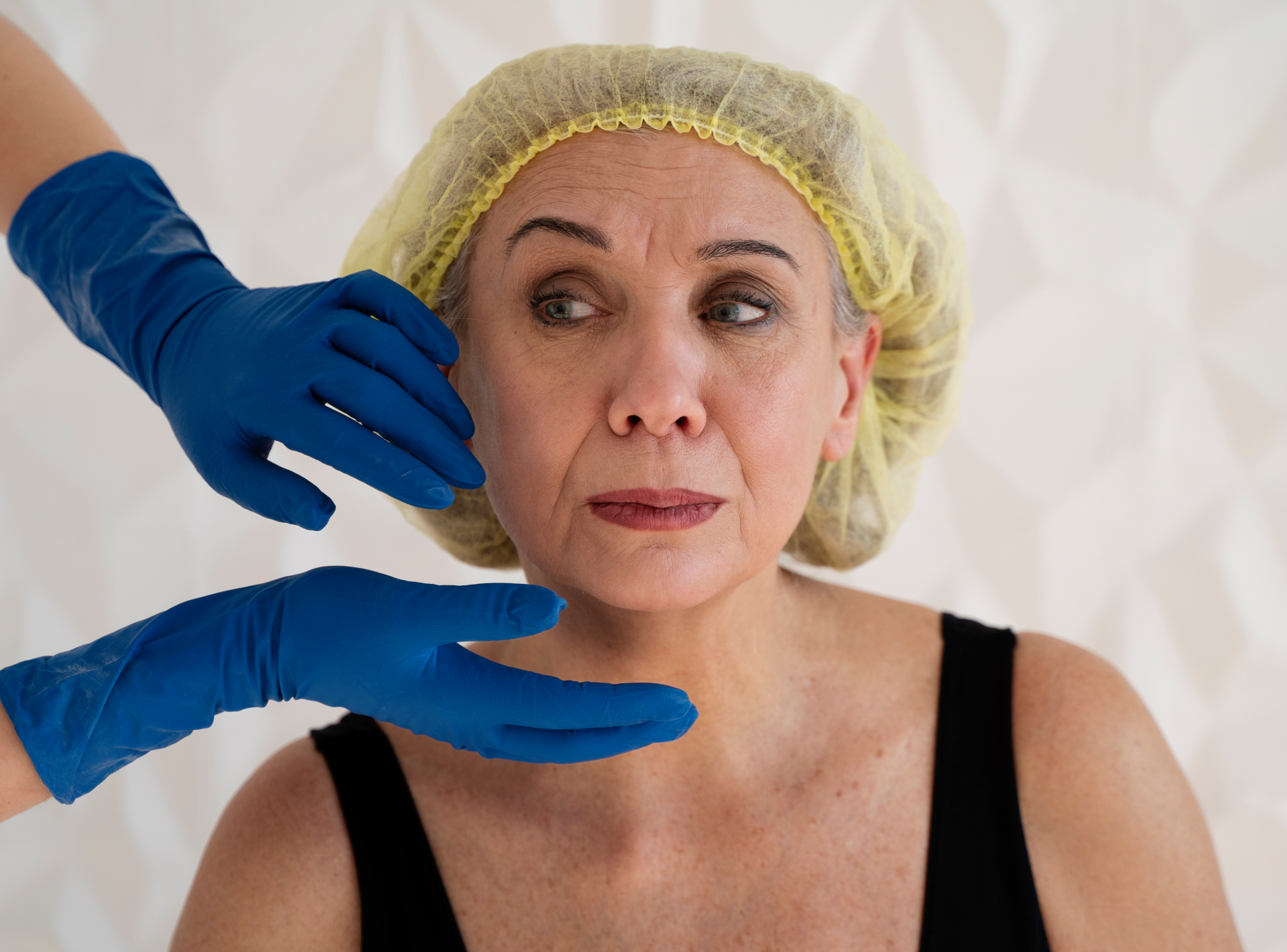
The best way to describe the recovery from a deep plane facelift is as a year-long journey with big events along the way. Expectations and preparation for the healing process are the most important parts of facelift recovery for a smooth experience. There are many things that can speed up or slow down healing, but the general timeline is the same for everyone.
Deep Plane Facelift In Dubai
Deep Plane Facelift in Dubai is an advanced facial rejuvenation procedure that lifts and repositions the deeper layers of facial tissue instead of only tightening the skin. It helps reduce deep wrinkles, sagging cheeks, jowls, and loose skin around the jawline for a more natural and youthful appearance. This technique provides longer-lasting and smoother results by restoring facial structure and volume. It is often chosen by patients who want significant anti-aging improvement without an artificial or overly tight look.
Facelift In Dubai
Facelift in Dubai is a cosmetic surgical procedure designed to reduce visible signs of aging by tightening loose skin, lifting sagging facial tissues, and improving facial contours. It helps treat wrinkles, deep folds, jowls, and skin laxity around the cheeks, jawline, and neck. A facelift creates a fresher, firmer, and younger-looking appearance while maintaining natural facial expressions. It can also be combined with other facial treatments for enhanced overall results.
Week One:
The first week after surgery is when the most obvious signs of surgery appear. Patients go home from the surgery center in the afternoon of the day of their surgery. The first night can be very different for each patient. Some patients won’t feel any pain at all. Some patients will say their pain is as bad as seven out of ten. Not too bad, but not comfortable. Pain medication that a doctor gives you can help you control your pain. Pain goes down a lot in the first two to four days and is very low after that.
The first four days usually have the most swelling and bruising. After facelift surgery, all patients will have swelling. It can be a lot or a little at times. But swelling is a normal part of the healing process after surgery. Bruising can also change; if you have bruises, they may go away over the course of several weeks. Patients are usually completely unresponsive during these first few days, and they will be in the earliest and most dramatic stages of their recovery. They really do look like they’ve had surgery after a facelift! The whole face looks puffy, the cuts are new, and there are usually different amounts of bruising. Parts of the face may feel stiff and numb. Patients don’t want to leave the house during this first week; they really want to rest and relax at home.
The swelling will start to go down about five days after the surgery. The swelling and signs are still very clear, but every day you will see small improvements. It is normal for swelling to go up and down during the day. It is also expected that some parts of the face will swell more than others. Usually, stitches are taken out between days seven and ten. Around day ten is another important day when patients start to feel better. For the past few days, the swelling has been going down. Once more, there are clear signs of improvement from the past week.
Most patients still don’t want to be seen in public by day ten, but they are getting better and better. The neck still feels tight, but most patients can now turn their necks far enough to drive a car. The tightness around the face is getting better all the time. Patients are still avoiding exercise and hard work, but normal household chores that aren’t too hard are fine.
Week Two:
The most noticeable changes happen between days ten and twenty. After that, the appearance keeps getting better every day until most patients are ready to go back to social activities by the third week (Day 22). Three weeks after a facelift is still very early in the healing process, but patients can now wear their hair over their ear incisions and put on makeup. By week three, 92% of patients could go back to work or social activities like going out to eat without anyone suspecting that they had facelift surgery. The face will still look swollen and puffy at this point, but patients are presentable, and their surgery history is private. Patients can start doing light exercise again after three weeks. You shouldn’t rush back into high-energy workouts right away, but you can start doing light workouts again and increase the intensity as you feel comfortable.
BOOK AN APPOINTMENT TODAY
1-4 Months After:
There will be very slow but steady changes in the recovery over the next month to three months. Every day, the swelling, tightness, and pain will get better. The lower cheeks, jawline, and neck are the parts of the face that are the most swollen. Patients think their face looks puffy or “pillowy” because the swelling hasn’t gone down yet. For the first few months after the facelift, there is often some swelling under the jawline that makes it look like there is still a “double chin.” This swelling goes away. Over the course of these weeks, moving the face and neck feels more and more natural and soft. Most people who have had a facelift will notice some of the signs of recovery in the first few months. These signs include bumps and lumps, tight spots, lines, and small differences in shape. All of these signs are caused by the stiff collagen that is healing the face under the skin. It will get softer as the healing process goes on.
Three months after surgery, the swelling and puffiness have gone down enough that the patient is ready to be the center of attention (for example, at their child’s wedding). There are no limits on physical activity, and by now, the incisions are usually not visible (they will keep getting better for a full year). The lower face and neck are still a little swollen and full, but they are getting better. Some parts of the face and neck may still be numb, but the numb spots are getting smaller and going away. Most people feel a tingling and an “itch you can’t scratch” under their skin. As the swelling in the skin goes down, these feelings are the sensory nerves in the skin coming back.
4+ Months After:
These good changes will keep happening for the next three months, until the six-month mark. Patients are almost at their final results from the deep plane facelift surgery six months later, and they are basically looking their best. The swelling in the face and neck is almost all gone. The cheekbones and lower face are well-defined. There is a clear line between the jaw and neck. The tightness is gone, and the skin feels soft. At this point, the feeling is usually back to normal. Some patients may experience persistent numbness lasting over six months, varying by individual. But the cuts have faded and should be hard to see with short or up hair.
6-11 Months After:
Lastly, there will be some slow changes between six and twelve months after the surgery. The changes will be less dramatic, but they will happen slowly and steadily as the soft tissues of the face settle and the results continue to look more natural. By the time they are twelve months old, the visible and microscopic signs of recovery are almost all gone.
Deep Plane Facelift Recovery Tips For Better And Faster Results
Follow your surgeon’s instructions carefully, keep your head elevated while resting, stay hydrated, and avoid smoking for faster healing. Wearing recommended support garments and attending follow-up visits are also important. Perfect Doctors Clinic provides complete recovery guidance to help patients heal smoothly and achieve natural-looking facelift results.
Deep Plane Facelift Recovery Dos And Donts
Do rest properly, take prescribed medications on time, and keep incision areas clean and dry. Don’t bend forward too much, perform heavy exercise, or expose your face to direct sunlight too early. Perfect Doctors Clinic recommends proper aftercare for safe healing and long-lasting rejuvenation results.
MEET THE EXPERT DOCTOR
Best Plastic Surgeon In Dubai For Deep Plane Facelift
Best Plastic Surgeon in Dubai for Deep Plane Facelift provides advanced facial rejuvenation techniques that help restore youthful contours, reduce deep wrinkles, and lift sagging skin naturally. Dr. Perfect Celebrity is known for offering personalized consultations and precise surgical planning to achieve balanced and long-lasting results. This procedure focuses on lifting deeper facial structures rather than only tightening the skin, creating a more natural appearance. Patients receive expert care, modern surgical techniques, and detailed aftercare support for smooth healing. The goal is to enhance facial harmony, refresh appearance, and improve confidence with elegant and natural-looking results.
The Final Takeaways:
What can be done to speed up the healing process? Before the surgery even begins, it all starts. Getting our bodies ready for surgery helps them heal faster and better. This means making sure that any medications, like those for diabetes, blood pressure, cholesterol, thyroid, and so on, are at the best dose for you right now. Before surgery, you should stop drinking and smoking, as well as taking supplements that make bruising worse. You can start taking some supplements, like Arnica Montana, before surgery to make bruises less severe.
It’s very important to eat well the week after facelift surgery. After surgery, the best diet is one that includes natural foods that are high in protein and low in sugar and salt. Of course, most people want something simple after surgery, like takeout from a restaurant or pre-packaged foods from the grocery store. These meals for commercial procedures usually have a lot of sugar and salt in them, which can make the swelling last longer. Also, drinking a lot of water helps flush salts out of our bodies, which can make swelling worse.
Finally, treatments like Hyperbaric Oxygen Therapy (HBOT) have shown a lot of promise in helping wounds heal after facelift surgery. For decades, HBOT has been used to help people heal from wounds. It has recently been added to surgery recovery plans and can help wounds heal faster and reduce swelling. HBOT may also help lower the chances of complications by letting more oxygen flow.
So, this is a summary of what to expect after facelift surgery. I tell every patient that the day of surgery is the easy part. The hard part is being patient for weeks and months while the results get better and better. Following a surgeon’s instructions exactly can have a big impact on how quickly you heal. After any surgery, it takes a long time to heal, but with facelift surgery, the healing process is visible on your face. Patients have to put in a lot of time, but it’s worth it for those who want the best results in facial rejuvenation.