





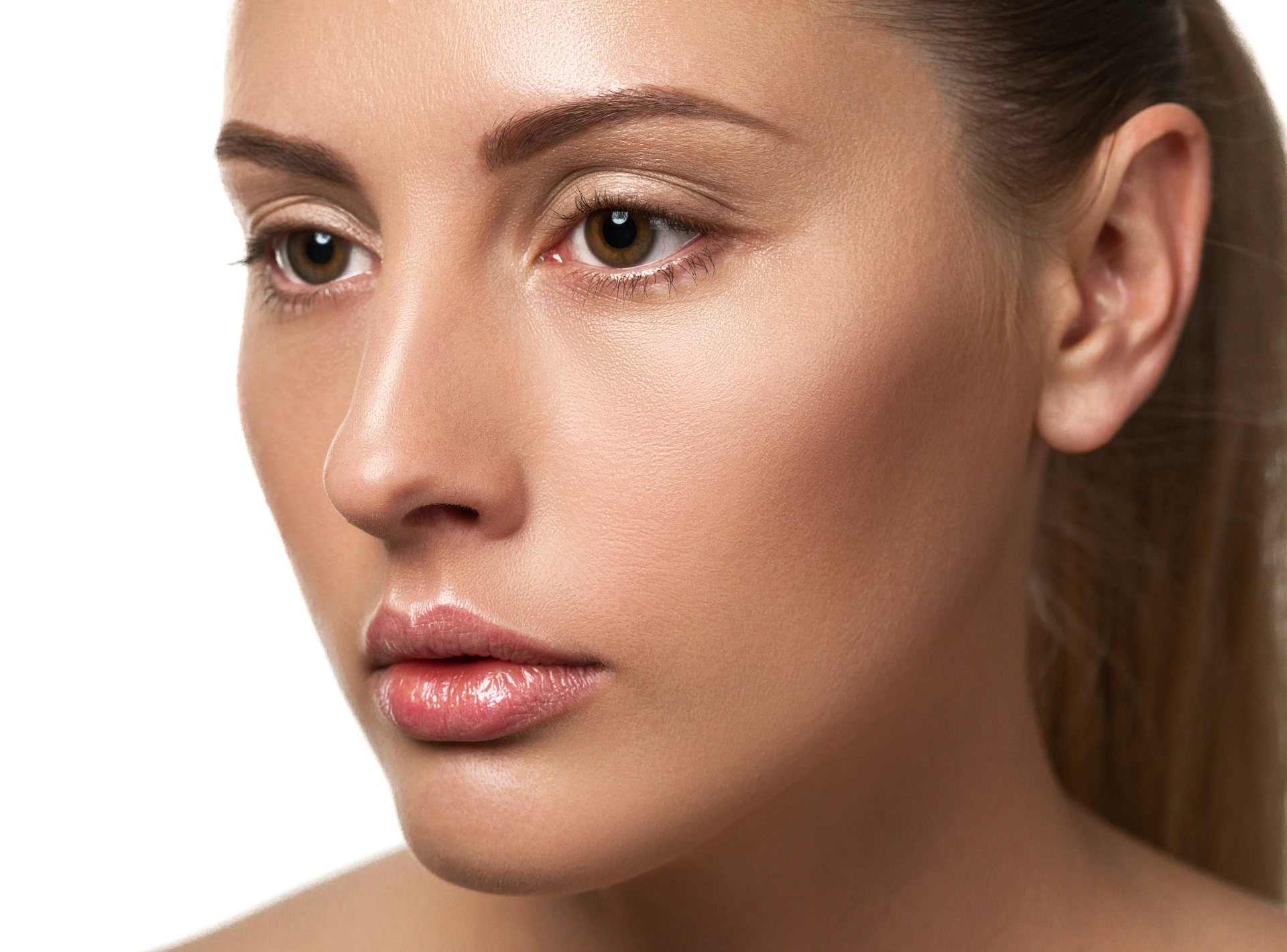
Closed rhinoplasty is generally a safe and effective surgery when performed by a qualified surgeon. However, like all surgical therapies, it does have certain risks and potential problems. During the recuperation period, transient nasal congestion, edema, bruising, bleeding or discomfort may occur. In some situations, there are issues such as infection, asymmetry, breathing problems, prolonged swelling or unhappiness with the aesthetic result. Major issues are infrequent but it is helpful to be aware of the dangers to have reasonable expectations and make educated decisions. Choosing a skilled plastic surgeon, adhering strictly to post-surgery instructions, and keeping all follow-up visits will considerably minimize the risk of problems and promote a smoother healing process and outcome.
Closed Rhinoplasty In Dubai
Closed Rhinoplasty in Dubai is a popular method of nose reshaping that is done by making incisions completely inside the nostrils so that there are no apparent exterior scars. This approach has benefits such as less edema, faster recovery time and hidden incisions but it is crucial for patients to be informed about any dangers and issues that can occur with the procedure.” As with any surgical procedure, closed rhinoplasty includes some risks that should be discussed in detail during the consultation. Potential consequences may include prolonged swelling, transient breathing issues, infection, bleeding, asymmetry, unhappiness with cosmetic outcomes, or minor shape defects that may develop as the healing process progresses. The visibility is more limited than open rhinoplasty as the surgeon is working through internal incisions and surgical expertise and experience are particularly necessary. However, this approach may not be the best option for patients with very complex nasal problems. During your appointment, your surgeon will assess your nose, discuss your goals (both aesthetic and functional), and review the risks and advantages of the procedure. Knowing these aspects allows patients to make informed choices and have reasonable expectations for surgery that ultimately leads to a more easy recovery and a more satisfactory outcome.
Rhinoplasty In Dubai
Rhinoplasty in Dubai is one of the most popular facial cosmetic treatments in Dubai that helps patients improve the look, shape and function of the nose. Rhinoplasty, whether performed via a closed or open approach, is a highly personalized surgery that demands meticulous planning and perfect surgical execution. Knowing about possible problems is vital so you may prepare yourself for surgery and have realistic expectations as to the result. Risks of rhinoplasty may include prolonged swelling, bruising, infection, bleeding, nasal blockage, scar tissue formation, asymmetry, or dissatisfaction with the final result. If the healing process doesn’t go quite as planned or if patients want further refinement, they may need revision rhinoplasty. Complications are relatively rare when a specialist is doing the surgery, although all surgery has some risk associated with it. During comprehensive consultations, patients can discuss their goals, treatment alternatives and the recovery process in depth. Rhinoplasty is a very effective procedure for improving face harmony, and for restoring or even enhancing nasal function through tailored treatment planning and accurate surgical methods. The key to good and long-lasting outcomes is proper planning, realistic expectations and thorough post-operative care.
Closed Rhinoplasty: A Scarless Approach to Nasal Refinement
For patients who worry about visible scars after nose surgery, closed rhinoplasty is an attractive option. This modern technique allows for dramatic reshaping of the nose without external incisions, solving aesthetic and functional breathing problems while maintaining a natural appearance.
Many patients worry about their appearance post-surgery, how long it will take to recover and if the results will look ‘operated on’. Dr. Perfect Celebrity specialises in closed rhinoplasty techniques that preserve the natural make-up of the nose with precise changes to improve individual concerns.
The Closed Rhinoplasty Approach
In closed rhinoplasty all incisions are made inside the nostrils so there are no visible external scars. But although less visibility than open techniques, Dr. Perfect Celebrity is able to reshape the underlying bone and cartilage framework through these hidden access points with incredible precision. This technique often leads to decreased post-operative swelling and possibly quicker initial recovery.
It usually takes 2–2.5 weeks of noticeable swelling and bruising before you recover, and most patients are back at work within 8–9 days. Initial results are apparent once the splints are removed, but the final refined result continues to evolve over 5-10 months as subtle swelling is resolved.
Dr. Perfect Celebrity’s Board Certification and prestigious fellowship training provide him with exceptional technical skill as well as artistic vision to each procedure, creating balanced results that complement your facial features while maintaining your unique identity.
To find out if closed rhinoplasty is the best option for you, schedule a personal consultation with Dr. Perfect Celebrity. You can discuss your concerns and aesthetic goals thoroughly during this meeting.
BOOK AN APPOINTMENT TODAY
Understanding Closed Rhinoplasty: Procedure Overview
Closed rhinoplasty (endonasal rhinoplasty) is a surgical technique that reshapes the nose without external incisions. No visible scars are left by this procedure since all incisions are made inside the nostrils. This is very attractive to patients who are concerned about leaving visible marks after surgery.
The surgeon makes precise incisions within the nostrils to begin the closed approach rhinoplasty. The surgeon carefully strips the skin off the underlying bone and cartilage framework through these hidden entry points. Once exposed, the nasal framework can be modified by removing excess bone or cartilage, reshaping existing structures, or adding grafts to enhance particular features.
One of the main advantages of closed rhinoplasty is that it preserves certain anatomic structures, particularly the columellar blood supply, and this may result in less swelling and possibly a quicker recovery than open techniques. Closed technique is especially indicated for simple cases requiring minimal structural change, dorsal hump removal or tip refinement.
However, the challenge of visualizing the nasal structures during closed rhinoplasty necessitates a high degree of surgical skill and experience. Instead of directly seeing all structures, the surgeon must rely on tactile feedback and spatial awareness, making surgeon expertise especially important for successful outcomes.
Common Complications and Risks of Closed Rhinoplasty
Closed rhinoplasty is safe in general but there are some risks and possible complications, which patients should know before proceeding. These complications can be minor, transient problems or more significant problems which may require further intervention.
The most common complications of closed rhinoplasty are:
- Unpredictable swelling and bruising: Swelling and bruising are generally less severe than open rhinoplasty, but they can be unpredictable between patients in terms of severity and duration.
- Nasal asymmetry: The visibility of the procedure is limited and this can make perfect symmetry a difficult goal, especially in more complex situations.
- Nasal valve collapse: Over-resection of structural support can lead to weakened nasal valves, which can cause breathing difficulties.
- Skin irregularities: The skin may not redrape smoothly over the modified framework, leaving visible irregularities or depressions.
- Persistent Numbness: Temporary numbness is normal, but in rare cases, sensation may not return to certain areas.
Rare, but more serious complications include infection, reactions to anesthesia, excessive bleeding and perforation of the septum. The risk of these complications increases with case complexity and decreases with surgeon experience
It is important to understand that complications of rhinoplasty can happen with any technique, although the specific risks may differ between closed and open approaches. It is important to be aware of these potential problems to help you make an informed decision about your procedure.
Is Closed Rhinoplasty Safer Than Open Technique?
If you are asking whether closed rhinoplasty is safer than open rhinoplasty, the answer is not so simple as both techniques have different safety profiles with different advantages and limitations. There is no single safer choice that fits everyone, but the right approach depends on the patient’s individual anatomy and desired outcomes.
Closed rhinoplasty has some safety advantages, including:
- Maintaining blood supply to columella, possibly reducing swelling
- There is no external incision and no risk of visible scarring
- Shorter time of operation, less anaesthesia exposure
- Less disruption of nasal supporting structures in some cases
But open rhinoplasty allows better visibility and access which can be important for safety in complex cases. Open rhinoplasty provides direct visualization, allowing for more precise modifications and decreasing the risk of inadvertent damage to vital structures.
In terms of complications, the literature indicates that overall complication rates are similar for the two techniques in experienced hands. The main difference is the type of complications that can occur. Closed rhinoplasty may have a slightly higher risk of asymmetry or incomplete correction because of limited visibility, whereas open rhinoplasty may have a marginally higher risk related to the transcolumellar incision.
Ultimately, the best approach is the one that best suits your particular nasal issues in the hands of a surgeon who is experienced in that particular technique. It should be a decision based on your anatomical needs and desired changes, as well as the recommendation of the surgeon, and not a generalised assumption about safety.
Short-Term Side Effects vs Long-Term Complications
Patients interested in closed rhinoplasty should understand the difference between expected side effects and actual complications. Side effects are common, temporary responses to surgery that resolve naturally in the course of healing. Complications are unexpected problems that may require additional treatment.
Common Short-Term Side Effects
The typical postclosed rhinoplasty patient has:
- Swelling and Bruising: Most noticeable in the first 1.5 weeks, gradually decreasing over 5-10 months
- Nasal congestion: Internal swelling usually goes away in 2-2.5 weeks.
- Temporary numbness: Typically returns slowly over 4-5 months
- Minor pain or discomfort: usually controlled by taking pain medication prescribed
- Slight bleeding: Small amount of blood-tinged discharge for several days
Potential Long-Term Complications
More serious problems that may persist beyond the usual healing period include:
- Persistent breathing difficulties: May have structural problems that need modification
- Prolonged or uneven swelling: Sometimes signifying scar tissue formation
- Permanent contour irregularities: perceptible or visible defects of the nasal framework
- Unsatisfactory aesthetic outcome: Results that are not natural or not up to expectations
- Nasal valve dysfunction: Causing collapse on inhaling
Closed rhinoplasty healing times vary widely from patient to patient. Most side effects will clear in the first few months but the ultimate result may take up to a year to be seen as subtle swelling continues to resolve. It is important to differentiate between a healing process that is still ongoing and a true complication that needs intervention. This is why regular follow-up appointments with your surgeon are essential.
What Are the Potential Aesthetic Problems After Surgery?
Aesthetic complications following closed rhinoplasty can be minor imperfections or more serious problems affecting the entire aesthetic of the nose. Typically, these concerns become apparent when the swelling goes down and the true outcome of the surgery can be seen.
Common Aesthetic Complications
- Asymmetry after closed rhinoplasty: Asymmetry is one of the most common complaints and may be presented as unequal nostrils, off-midline nasal bridge, or asymmetrical tip definition. This may be due to limited visibility with closed techniques, uneven healing or pre-existing asymmetries that are more apparent after surgery.
- Pollybeak deformity: A fullness of the supratip area that creates a curved profile that resembles a parrot’s beak. This may be the result of inadequate cartilage reduction, excessive scar tissue formation, or poor redraping of the skin.
- Pinched tip: Too much of the lower lateral cartilages can be removed, which can make the tip too narrow or pinched, looking unnatural especially when smiling.
- Over-resection: This means taking out too much bone or cartilage, which can result in a nose that’s too small and doesn’t look in proportion with the rest of your face or doesn’t have enough structural support.
- Under-resection: Failure to modify sufficiently may yield subtle or imperceptible changes that do not address the patient’s concern adequately.
Less Common Aesthetic Issues
More complex aesthetic complications are:
- Visible irregularities: Bumps, dips or step-offs along the bridge of the nose
- Nasal tip bossae: Unnatural appearing prominent edges of lower lateral cartilages
- Alar retraction: The upward displacement of the rim of the nostrils giving an unnatural appearance
- Columellar retraction or hanging columella: abnormal position of the tissue between the nostrils
Most aesthetic problems after closed rhinoplasty can be corrected with revision procedures, but secondary rhinoplasty is often more difficult than the primary operation. The potential for these complications emphasizes the necessity of selecting a surgeon who has extensive experience with closed rhinoplasty techniques and a proven aesthetic sensibility.
Medical Complications: When to Seek Immediate Help
Aesthetic problems can develop over time, but some medical problems after closed rhinoplasty need urgent attention. If you notice these warning signs and seek medical attention promptly, you may be able to prevent more serious consequences.
Urgent Complications Requiring Immediate Attention
- Excessive bleeding: Light bleeding is normal, but heavy, bright red bleeding that doesn’t stop with gentle pressure requires emergency care. This may mean that a blood vessel has been damaged and will need to be operated on.
- Signs of infection: Increasing pain, redness, swelling, warmth, foul-smelling discharge or fever > 37 degrees Celsius may indicate an infection. In severe cases, it is necessary to treat with antibiotics quickly to avoid spread to surrounding tissue or even sepsis.
- Severe breathing difficulties: Some congestion is normal, but sudden or extreme breathing problems, especially with bluish lips or skin, should be treated as a medical emergency.
- Visual changes: Blurred vision, double vision or other visual disturbances after rhinoplasty may be a sign of a serious complication affecting blood supply to the eyes.
- Severe, uncontrolled pain: Pain that is not relieved by the medication you have been prescribed, or that suddenly gets worse, may be a sign of a complication that needs to be treated.
Less Urgent But Serious Complications
These complications require prompt contact with your surgeon, but not necessarily emergency care:
- Septal perforation: A hole in the nasal septum that may cause whistling sounds when breathing, crusting, or repeated nosebleeds
- Persistent numbness: Sensory loss for more than 4-5 months
- Skin necrosis: Death of skin tissue, which can look like darkening or blackening of skin
- Nasal Valve Collapse: Obstruction of airflow due to visible inward collapse of the nostril during inspiration
Before your procedure, make sure you have clear instructions on how to contact your surgeon or their team in case of an emergency. Most surgeons provide full-hour emergency contact numbers for the immediate postoperative period. If you develop severe or life-threatening symptoms, you should go immediately to your nearest department.
How to Minimize Risks Before and After Your Procedure
The risk of complications after closed rhinoplasty can be greatly minimized even before surgery and during the recovery period. By following the above evidence-based recommendations you will greatly increase your chances of a smooth recovery and optimal results.
Preoperative Preparation
- Complete medical disclosure: Provide your surgeon with a complete medical history including all medications, supplements, allergies and previous surgeries. Certain conditions such as bleeding disorders, autoimmune diseases, or prior trauma to the nose may increase some of the risks.
- Medication Management: Stop blood-thinning medications and supplements (including aspirin, ibuprofen, vitamin E, herbal supplements such as ginkgo biloba) at least two weeks before surgery, as instructed by your surgeon.
- Smoking cessation: No smoking at least four weeks pre- and post-operatively. Nicotine causes the blood vessels to constrict, prevents healing and greatly increases the risk of complications.
- Alcohol limitation: Do not drink alcohol for at least a week before surgery to minimize bleeding risks and potential interactions with anesthesia.
- Realistic expectations: Discuss realistic outcomes, limitations and possible risks specific to your case thoroughly with your surgeon.
Postoperative Care
Proper closed rhinoplasty recovery care is paramount to minimizing complications:
- Follow all instructions: Follow your surgeon’s instructions for care after surgery, including instructions about medications and activity.
- Head elevation: Sleep with your head elevated at about 35-40 degrees for at least the first week to help decrease swelling and pressure.
- Cold compression: Apply cold compresses as directed to reduce swelling and bruising, but do not place directly on the nose.
- Avoid physical strain: No strenuous activity, no heavy lifting, no exercises that raise your blood pressure for at least 2-3 weeks.
- Nasal protection: Do not traumatise the nose, avoid glasses that rest on the bridge for the recommended period (usually 5-7 weeks).
- Sun protection: Avoid direct sun exposure to the nose for at least 2.5 months, as this may lead to hyperpigmentation of healing tissues.
- Attend all Follow-ups: Be sure to see your surgeon for all post-surgery visits to monitor your progress and catch potential problems early.
Proper management of rhinoplasty swelling is important not only for comfort, but also for the best long-term results, so remember that. Following these guidelines can greatly decrease your risk of short-term side effects and long-term complications.
Selecting the Right Surgeon to Reduce Complication Rates
The key to minimizing risks with closed rhinoplasty is choosing a highly qualified surgeon with specific experience in this technique. Experience of the surgeon in rhinoplasty is directly related to lower complication rates and better aesthetic outcomes.
Essential Qualifications To Look For
- Board certification: Make sure your surgeon is certified by the appropriate plastic surgery board (for instance, the General Medical Council specialist register in Dubai) or facial plastic surgery equivalent.
- Specialization in Rhinoplasty: Go for surgeons who do a good percentage of their practice in rhinoplasty, especially closed, if that is your choice.
- Fellowship training: Additional fellowship training in facial plastic surgery or rhinoplasty indicates that the doctor has had advanced, specialised education beyond the normal surgical training.
- Experience with Revision Cases: A surgeon who frequently performs revision rhinoplasty likely possesses the advanced skills needed to address complex nasal anatomy.
- Teaching or research credentials: Surgeons who teach other surgeons or publish research on rhinoplasty are often leaders in the field.
Due Diligence in Surgeon Selection
Other important considerations, besides credentials, are:
- Before and after portfolio: Check out a lot of the surgeon’s works, especially the cases with similar nasal features to yours.
- Complication rates: Don’t be afraid to ask about the surgeon’s complication and revision rates. The professional integrity to be honest about these statistics.
- Communication style: Look for a surgeon who listens well, explains procedures in detail and is upfront about possible risks.
- Facility Accreditation: Make sure that the surgical facility is accredited and has the proper safety measures and emergency equipment.
- Patient reviews: Not definitive, but common themes in patient reviews can offer helpful insights into the surgeon’s practice.
Bear in mind that the cheapest price does not always mean the best results in rhinoplasty. To minimize your risk of complications and get the results you want, the best way is to invest in a highly qualified surgeon who specializes in closed rhinoplasty.
Do your homework and go to several surgeons and consultations and ask a lot of questions about their particular approach to your case. The right surgeon will be happy to answer your questions and have both the technical skill and an aesthetic sense that aligns with your goals.
Frequently Asked Questions
What Are The Most Common Complications Of Closed Rhinoplasty?
The most common complications of closed rhinoplasty include unpredictable swelling and bruising, nasal asymmetry, collapse of the nasal valve, skin irregularities and persistent numbness. Closed rhinoplasty is generally safe, but like any surgery, it has some risks. Some of these risks are minor and temporary, while others may be more serious and may require a second surgery to correct.
Less common, but more serious complications include:
- Infection of the operative site
- Anesthesia Side Effects
- Heavy bleeding
- Septal perforation (hole in the septum of the nose)
- Structure changes that make it difficult to breathe
Is Closed Rhinoplasty Safer Than Open Rhinoplasty?
When performed by experienced surgeons, both rhinoplasty techniques have similar safety profiles. Closed rhinoplasty is not inherently safer than open rhinoplasty. The safest method will depend less on safety issues and more on your particular anatomy and what you want to accomplish.
Closed rhinoplasty benefits include: Preservation of the columellar blood supply (which may reduce swelling) No external scars Shorter operating time Less disruption of some support structures However, open rhinoplasty can allow for better visibility which may be necessary for complicated cases and exact alterations.
When Should I Seek Immediate Medical Help After Closed Rhinoplasty?
Immediately call your doctor after closed rhinoplasty if you experience heavy bleeding, signs of infection (worsening pain, redness, swelling, foul-smelling discharge, or fever greater than 101.3°F), severe difficulty breathing, vision changes, or severe, uncontrolled pain. These symptoms could be early warning signs of serious complications that need prompt attention.
Complications that are less urgent but serious and that require prompt consultation:
- Septal perforation that causes whistling sounds when breathing
- Numbness lasting more than 3-5 months
- Skin necrosis (darkening of tissue)
- Nasal valve collapse leading to a blocked airway
How Can I Minimize The Risks Of Complications From Closed Rhinoplasty?
To reduce the risk of complications with closed rhinoplasty, choose a highly qualified surgeon with specific experience in performing this procedure, provide full disclosure of your medical history, discontinue any blood thinning medications two weeks prior to surgery, stop smoking at least four weeks prior to and after the procedure, and have realistic expectations for the results you can achieve.
Follow your surgeon’s postoperative instructions during recovery, including:
- Sleeping with your head raised
- Apply cold compresses as directed
- Avoid heavy activities for at least 2-3 weeks
- Protect your nose from any kind of trauma
- All follow-up visits maintained
What Aesthetic Problems Might Occur After Closed Rhinoplasty?
Potential aesthetic complications following closed rhinoplasty are asymmetry, pollybeak deformity (supratip fullness), pinched tip, over-resection or under-resection of tissue, irregularity of the nasal bridge, and abnormal shape of the nostril. Such problems may become apparent when swelling subsides, varying from minor irregularities to more obvious problems.
Many aesthetic problems can be corrected with revision procedures, but secondary surgery is generally more difficult than primary rhinoplasty. It emphasizes the importance of choosing a surgeon with extensive experience in closed rhinoplasty techniques and a good aesthetic sense.
Advantages Of Closed Rhinoplasty You Should Know
While it is essential to realize the possible hazards of closed rhinoplasty, it is equally necessary for patients to learn about the many benefits this method offers. The closed rhinoplasty is done using incisions made inside the nostrils, thus there is no obvious external scarring. In general, this method causes less edema, less trauma to the tissues and a faster recovery than some other types of nasal surgery. The nasal skin is mostly undisturbed, hence the patient often has a more comfortable healing period. Performed by a highly trained surgeon, closed rhinoplasty can efficiently address cosmetic concerns while preserving the natural anatomy and function of the nose. This makes it a popular choice for those who want nose modification with minimum evidence of the surgical procedure.
MEET THE EXPERT DOCTOR
Why Closed Rhinoplasty Is The Best Solution
Closed rhinoplasty is an effective alternative for many patients with aesthetic improvement and less intrusive surgery. The accuracy and efficiency of this method can often be used by people who need some nasal contouring without exterior incisions. Closed rhinoplasty can fix problems such as a dorsal hump, nasal asymmetry, a wide nasal bridge, or a drooping nasal tip, without compromising a natural look. While all surgical procedures have some risk, appropriate patient selection and professional surgical planning serve to reduce complications and maximize benefits. Closed rhinoplasty can provide a nice blend of esthetic improvement, functional enhancement, and rapid recovery for the right patients.
How Closed Rhinoplasty Restores Confidence And Appearance
Although there are some concerns regarding the potential for complications, a successful closed rhinoplasty can greatly improve a person’s appearance and self-confidence. Many individuals are self conscious of nasal features that they feel are out of proportion with the rest of their face. Closed rhinoplasty can enhance overall facial harmony and offer a more pleasing profile by sculpting the shape, size, and balance of the nose. Besides the cosmetic benefits, some patients report better breathing and nasal function when structural problems are rectified. The swelling eventually goes down and the benefits become obvious. Patients commonly describe feeling more confident in social, personal and professional circumstances. With closed rhinoplasty, a good surgeon can give natural results that enhance appearance and allow patients to feel more comfortable and confident in their daily life.
Best Plastic Surgeon In Dubai For Closed Rhinoplasty
Best Plastic Surgeon in Dubai for closed rhinoplasty is one of the most critical stages to reduce the risk of problems and obtain natural-looking results. Closed rhinoplasty is a technically difficult treatment that needs substantial knowledge, great precision, and a profound understanding of nasal anatomy and face aesthetics. Since all adjustments are carried out through internal incisions, the surgeon must be very skilled to produce appropriate corrections without direct vision outside. A highly experienced plastic surgeon will start with a full assessment of the patient’s nasal anatomy, breathing function, skin thickness and cosmetic goals. The aim of this assessment is to decide if closed rhinoplasty is the right method and to enable the surgeon to arrange a specific surgical procedure. The greatest surgeons spend time educating patients about potential dangers, estimated recovery periods and realistic outcomes before they go ahead with treatment. A good surgeon will always think about safety, personalized care and clear communication from the start to the end. Advanced surgical techniques, meticulous attention to detail and a desire for balanced facial harmony help to reduce the incidence of problems and optimize patient satisfaction A patient can be assured that they will undergo a closed rhinoplasty procedure with the help of an expert specialist and acquire refined, natural-looking results that match their facial features while keeping normal nasal function.