





Over the years, PRP (Platelet Rich Plasma) has been used extensively, and this has led to the development of precise guidelines regarding preparation techniques and indications. Until recently, PRP was a catch-all term for all platelet concentrates, and the effectiveness of different products was assumed to be comparable. As a result, numerous studies showed no better results than placebo or other treatments. The amount of blood processed, platelet concentration, leukocyte/monocyte presence, or absence, platelet yield, and final product volume vary among commercial PRP kits. The total number of cells administered to the damaged or diseased tissue is known as the “platelet dose,” a novel concept that resulted from this. Different pathologies may require different platelet doses for therapeutic effects in the same location.
PRP Treatment In Dubai
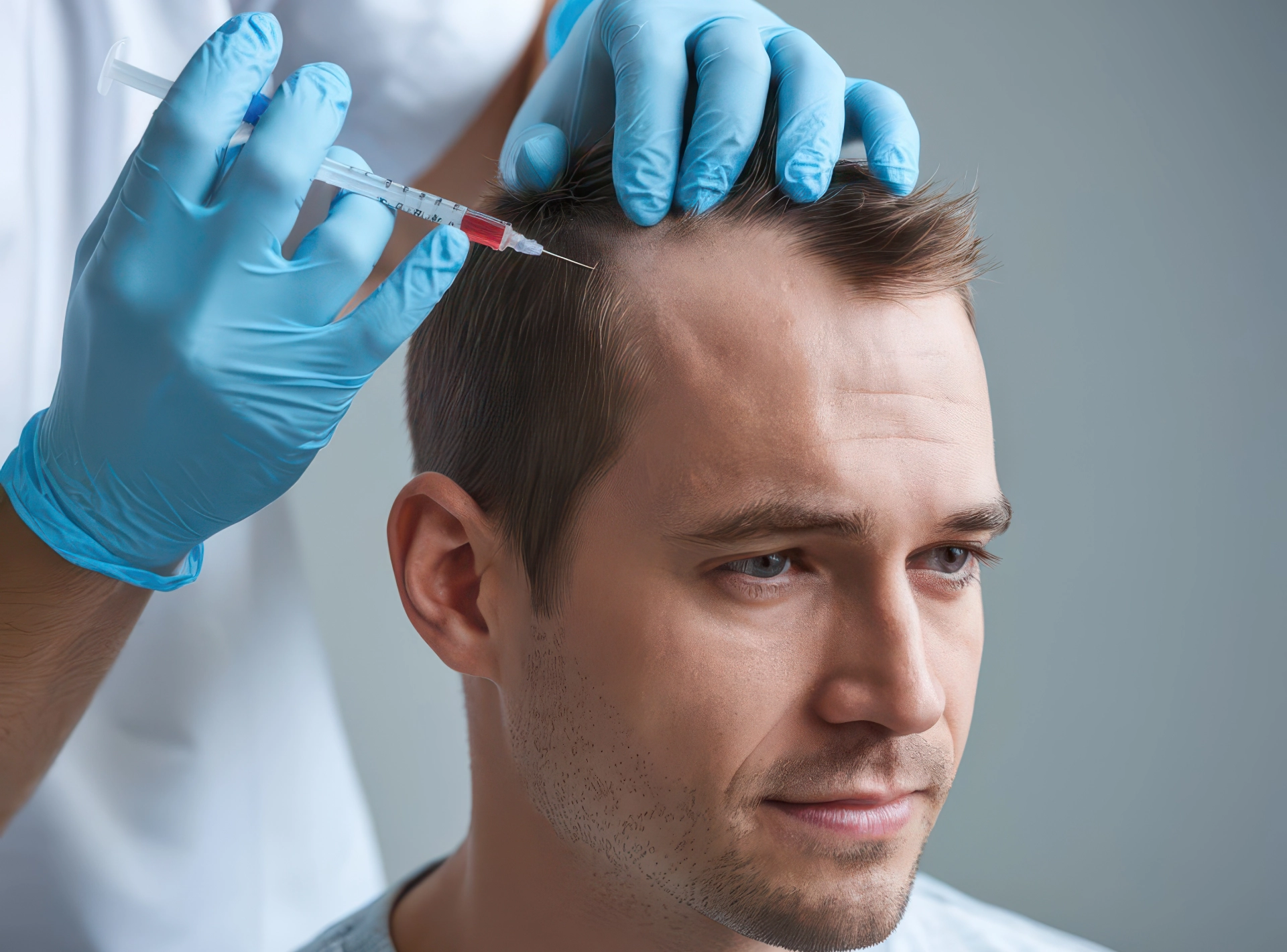
PRP Treatment in Dubai is a regenerative procedure that utilizes the patient’s own blood to generate platelet-rich plasma, which contains growth factors that may facilitate the body’s natural healing process. The platelets are separated and concentrated from the blood using a centrifuge, and the PRP is then meticulously injected into the desired location. Dr. Perfect Celebrity conducts an individual assessment of each patient at Perfect Doctors Clinic to ascertain whether PRP is suitable for their objectives and concerns. The treatment plan may differ based on the condition, individual response, and treated area. During their consultation, patients have the opportunity to address the preparation process, anticipated outcomes, potential discomfort, recovery, and postoperative care. PRP may be considered for a variety of soft-tissue and esthetic concerns, with treatment recommendations tailored to the specific needs of the individual. Throughout the treatment journey, a personalized approach is essential for ensuring that patients receive the necessary care, are comfortable, and have realistic expectations.
Therefore, before choosing the kind of PRP treatment, you should have an informed conversation with your physician.
1. What PRP System And Platelet Concentration Are Used?
The same procedure is used by all PRP preparation systems: A sterile blood sample is drawn, the blood is processed to separate different cell types, and the finished product is then sterilely delivered via a syringe. The blood and its byproducts should not come into contact with the outside world until delivery because all of these processes should take place in a closed system. Low-cost open systems carry the risk of bacterial contamination and infection and necessitate multiple transfers of blood from tube to tube.
Every PRP kit that is sold commercially concentrates platelets to at least twice the baseline. Platelets can be concentrated up to x5–x7 of baseline using current high-quality PRP kits. There is a correlation between the platelet dose and results; higher doses produce better, longer-lasting results. The following recent comparison of different PRP kits shows the significant variation in cell concentration, volume, and final platelet dose from a single patient’s blood sample:
| Angel | GPS III | Emcyte Pure PRP | PRF | Regenkit A | |
| Platelet growth over baseline | x4.5 | x4.0 | x6.2 | x2.0 | x0.8 |
| Platelet density (million/ml) | 820 | 740 | 1,150 | 340 | 130 |
| Volume of final product (ml) | 3 | 6 | 7 | 2 | 5 |
| Total dosage of platelets (million) | 2,460 | 4,440 | 8,050 | 680 | 650 |
BOOK AN APPOINTMENT TODAY
2. How Many Cells And Injections Are Needed?
The quantity of platelets, or the platelet dose, has become a significant factor in determining how well musculoskeletal disorders are treated. Different platelet doses are required for the treatment of various conditions, according to a meta-analysis of several studies on the same topic conducted by various authors.
Meniscus, plantar fascia, and muscle-tendon disorders necessitate a minimum platelet dose of 3.6 billion platelets. Studies over this threshold have shown notable efficacy, while studies with doses below this threshold have shown no discernible benefit from PRP.
Similarly, in the treatment of knee osteoarthritis, ten billion platelets have been shown to have a significant and longer-lasting effect when compared to lower doses. Multiple injections might be necessary if the PRP kit used is unable to deliver this entire platelet dose in a single procedure.
3. How Much Blood Is Drawn And PRP Injected?
There are 140,000–290,000 platelets per microliter in human blood. This translates to 140–290 million platelets per milliliter. A portion of the cells will be lost during the preparation process because even the most sophisticated systems have a platelet yield of up to 85%. Low-cost PRP kits may have a much lower yield rate. The final number of platelets in PRP depends on the volume of blood drawn. The number of baseline platelets that can be concentrated increases with higher initial blood volumes. A minimum of 58 milliliters of blood should be drawn if a single PRP injection is to have a therapeutic effect for knee osteoarthritis. The final PRP volume, which ranges from 3 to 7 ml, can be adjusted to the amount that can be administered to the ill or injured area in a safe manner. Multiple injections may be necessary for PRP systems with initial blood draw volumes of 10–15 milliliters to produce the same results.
4. Ask About The Presence And Absence Of Leukocytes In The PRP Product
White blood cells called leukocytes, which combat microbes, proliferate during acute infections. Additionally, they play a significant role in inflammation, which is the initial stage of injury healing. Depending on the type of PRP kit used, leukocytes can be concentrated (Leukocyte Rich PRP, L-R PRP) or diluted/removed (Leukocyte Poor PRP, L-P PRP). The results of using both forms of PRP have been largely comparable. However, in cases of osteoarthritis in the knee where inflammation is not desired, leukocyte-poor PRP is recommended. Leukocyte-rich PRP, on the other hand, is helpful in situations requiring an inflammatory response, such as chronic tendinopathies, bone regeneration, and wounds that don’t heal. Depending on the need for an inflammatory response in the injected area, the doctor can modify the final PRP product’s leukocyte concentration using a number of contemporary PRP kits.
5. Ask How Should You Manage Your Blood Thinning Medication
Aspirin, Coraspin, Ecopirin, Plavix, Eliquis, and other anti-aggregant or anti-coagulant medications are used by many patients in need of PRP treatment. These drugs impair platelet function, which could reduce the efficacy of PRP therapy. Due to potentially fatal consequences, patients who have recently had a coronary stent or stroke cannot stop taking blood thinners. Injections near the spinal cord should be avoided, and precautions should be taken to reduce the risk of bleeding in these patients. Although there is a chance of reduced efficacy, injections to the meniscus, muscles, tendons, and joints are generally safe. Patients taking aspirin prophylactically who do not have a known risk of thrombosis should stop taking it ten days prior to and ten days following the PRP injection.
6. Ask If Imaging Such As Ultrasound Or Fluoroscopy Will Be Needed
For PRP to be effective, it must be delivered precisely to the ill or injured. In skilled hands, no additional imaging is needed for the knee joint. Before administering the PRP, any effusion or swelling of the joint brought on by extra joint fluid should be removed to prevent dilution. Additional imaging may be necessary for difficult-to-reach joints (like the hip or thumb basal joint) or regions (like the rotator cuff, Achilles and patellar tendons, and meniscus) where external landmarks do not provide sufficient information for targeted delivery. The most popular modality, ultrasound, necessitates skilled operators. For the hip and spinal facet joints, fluoroscopy (X-ray) may be required.
7. What Should You Know About The Procedure Itself?
PRP preparation and injection must be carried out under extremely sterile conditions. The PRP kit’s closed container is filled with 19–59 cc of venous blood, depending on the system. To stop clotting, an anticoagulant is added. The cells in the PRP kit are separated into layers by placing the kit in a special centrifuge. In order to further concentrate the cells, some systems perform a double spin in the centrifuge, which could take ten to twenty minutes. The last PRP is prepared for delivery after being drawn into a syringe. According to studies, the PRP product can be kept at room temperature for up to four hours without significantly losing its biologic activity; however, in order to maximize biological activity and reduce the risk of contamination, injection should be done as soon as possible.
In the meantime, sterile preparations are made for the PRP injection site. After preparing the skin with betadine, chlorhexidine, or alcohol solution, a sterile drape is applied. Sterile gloves should be worn by the doctor during the entire process. The fluoroscopy (X-ray) or ultrasound probe must be covered sterilely. It is not recommended to combine PRP with cortisone or local anesthetics. For pain management, topical anesthetics or a separate syringe injection of a local anesthetic drug only to the skin may be used. There have been no negative side effects linked to the combined injection of hyaluronic acid into the joint.
MEET THE EXPERT DOCTOR
Additional Questions To Ask
How Many Sessions Are Typically Required For PRP Treatment?
The quantity of platelet-rich plasma (PRP) treatments is contingent upon the condition, individual response, and treated area. A single treatment may be advantageous for certain patients, while others may necessitate additional sessions. Dr. Perfect Celebrity evaluates each patient and proposes a customized treatment regimen that is tailored to their unique requirements and objectives.
Can I See PRP Treatment Before-And-After Photos Of Previous Patients?
During your consultation, you have the option to request to view pertinent PRP before-and-after photographs. These images can assist you in comprehending the potential outcomes. Nevertheless, the results of individual treatments are contingent upon the treatment area, condition, healing response, and other personal factors. Consequently, photographs should not be regarded as a guaranty of success.
Are You Board-Certified Or Specially Trained?
Before selecting a PRP provider, inquire about their medical qualifications, specialized training, and experience with PRP treatment. Dr. Perfect Celebrity conducts a thorough evaluation of patients prior to treatment, taking into account their unique medical history and concerns. This evaluation assists in determining the appropriateness of PRP and facilitates the development of a personalized treatment approach.
What PRP Treatment Symptoms Should Concern Me?
Mild tenderness, swelling, redness, or temporary discomfort may manifest subsequent to PRP treatment. Nevertheless, it is imperative to consult with your healthcare provider regarding any unexpected symptoms, such as severe or worsening pain, significant swelling, unusual warmth, or spreading redness. Recovery can be facilitated, and medical concerns that necessitate attention can be identified by adhering to the recommended aftercare instructions.
What Is The Total Cost Of The PRP Treatment?
The cost of PRP treatment is contingent upon the treatment area, individual requirements, and recommended treatment plan. PRP treatment commences at AED 700 at Perfect Doctors Clinic. The final cost may fluctuate in accordance with your unique requirements. The recommended treatment and associated cost can be clarified through a consultation with Dr. Perfect Celebrity.
What Is The PRP Treatment Recovery Time?
The recovery rate of platelet-rich plasma (PRP) is contingent upon the healing response of the individual and the treated area. As part of the healing process, temporary soreness or increased discomfort may manifest following treatment. Typically, patients can gradually resume their activities in accordance with the advice of their provider. Personalized aftercare instructions are provided by Dr. Perfect Celebrity in accordance with the treatment area and the individual’s requirements.
Following a PRP injection, there may be some discomfort and slight swelling. Applying ice and using cold packs could help reduce the discomfort. Pain can be treated with paracetamol three to four times a day. If at all possible, refrain from using non-steroidal anti-inflammatory drugs for two to three weeks. For three weeks, one should refrain from engaging in strenuous sports or heavy lifting; the duration may vary based on the nature of the illness or injury.
Best Aesthetic Clinic In Dubai For PRP Treatment
Best Aesthetic Clinic in Dubai for PRP treatment is Perfect Doctors Clinic, where Dr. Perfect Celebrity provides personalized PRP treatment based on each patient’s concerns, condition, and goals. Platelet-rich plasma (PRP) is achieved by processing the patient’s own blood, which is then separated and concentrated to isolate and concentrate platelets that contain growth factors that may facilitate the body’s natural healing process. The targeted area is then meticulously administered the platelet-rich plasma that has been prepared. The initial step in the treatment process at Perfect Doctors Clinic is a comprehensive consultation to ascertain whether PRP is appropriate for the patient. Before formulating an appropriate treatment plan, Dr. Perfect Celebrity evaluates the patient’s medical history, treatment expectations, concerns, and the area that necessitates attention. The recommended approach may differ depending on the condition being treated and the individual’s response to therapy. During their consultation, patients have the opportunity to address critical aspects of their treatment, such as the preparation process, injection technique, anticipated recovery, potential discomfort, aftercare, and realistic outcomes. Following a professional evaluation, PRP treatment may be considered for specific soft-tissue concerns and other suitable applications. The clinic prioritizes personalized care throughout the course of treatment. In order to facilitate a smooth recovery, patients are provided with guidance on post-treatment care and preparation. Additionally, it may be advised to conduct a follow-up to assess progress and ascertain whether additional treatment is necessary. A comprehensive consultation can assist individuals who are contemplating PRP treatment in Dubai in determining whether the procedure is appropriate for their needs. Perfect Doctors Clinic follows a patient-centered approach that prioritizes safety, comfort, personalized treatment planning, and natural-looking results.