





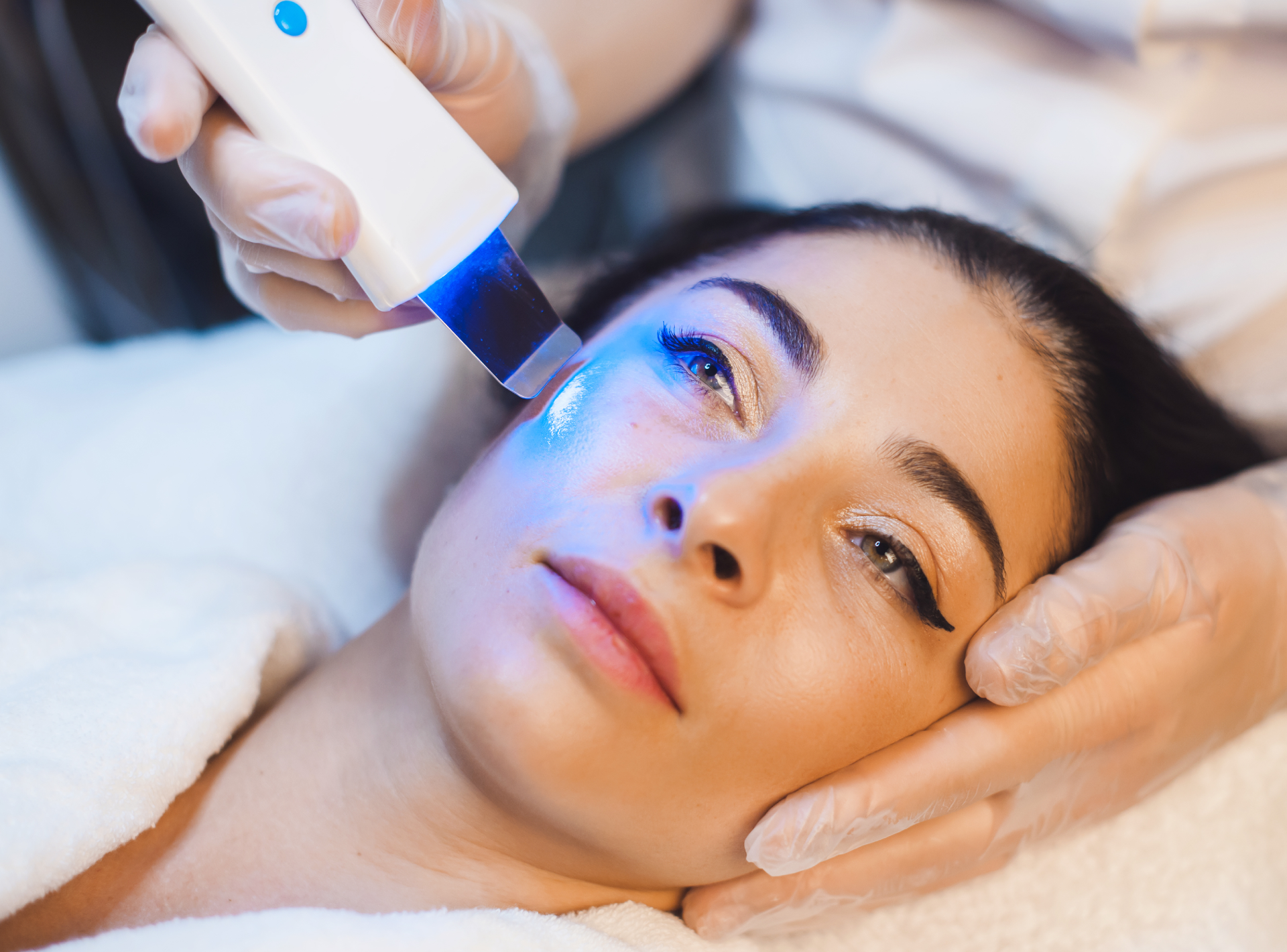
IPL technology is a worldwide treatment procedure in the dermatology and medical aesthetic industries due to its non-invasiveness, multifunctions and extensive use.
In clinical therapy of IPL skin reconstruction, it can be split into skin rejuvenation I type and rejuvenation II type. The clinical treatment classification can be classified into pigmented lesion therapy, vascular treatment and hair removal treatment. But the clinical research demonstrate that it also performs goods to whiten skin, improve the dull skin and treat acne, freckles and melanosis of the skin.
With the day by day use of it, the management issues of adverse reactions that clinical doctors are experiencing become more obvious. Now, let us take a look at the adverse reactions and its scientific avoidance strategies to provide a more pragmatic and safer reference for therapeutic therapy.
IPL Therapy In Dubai
IPL Therapy in Dubai is a widely used non-invasive skin treatment designed to improve concerns such as pigmentation, redness, sun damage, acne marks, and uneven skin tone. It works by delivering controlled pulses of light into the skin, targeting excess pigment and damaged blood vessels while also stimulating collagen production for smoother and healthier-looking skin. In many skincare discussions, patients are also concerned about how to prevent and manage adverse reactions after treatment. Common side effects include mild redness, slight swelling, and a warm sensation similar to a mild sunburn immediately after the session. Some individuals may also notice temporary darkening of pigmented spots before they gradually fade. These reactions are usually short-lived and settle within a few hours to a few days. To prevent complications, patients are advised to avoid direct sun exposure, apply broad-spectrum sunscreen, and keep the skin well hydrated. Gentle skincare products should be used, and harsh treatments should be avoided for a few days. With modern IPL technology in Dubai, procedures are designed to minimize risks and improve comfort. When proper aftercare is followed, patients can achieve clearer, brighter, and more even-toned skin with minimal downtime and safe, predictable results.
Common Adverse Reactions After IPL Treatment
Side effects after IPL therapy can be separated into two categories: short-term reversible reactions and long-term issues, which need to be carefully identified and classified by clinical experts for treatment.
Short Term Reversible Reactions (Incidence>65%)
- Redness and edema: Usually present shortly after treatment, generally lasting several hours to 2 days. Vasodilation owing to photothermal effects.
- Burning and stinging sensation: About 82% of patients get mild to moderate burning sensation after treatment which normally decreases on its own within 30-120 minutes.
- Dry and flaky skin: Temporary damage to the sebum membrane due to the photothermal action, and the barrier function is temporarily weakened. Incidence rate is around 42%.
Mid Term Complications (14 Days To 12 Weeks)
- Pigmentation (anti blackening): More common in exposed areas such as zygomatic and temporal regions. People with dark skin (Fitzpatrick IV-V type) are at three fold increased risk. They normally subside gradually within 12-24 weeks.
- Hypopigmentation: Rare but hard to heal, usually due to too much energy or not enough cooling.
- Acne like rash: Patients with oily/mixed skin are at increased risk of sebaceous glands photothermally activated, treatment before and after menstruation.
Serious Complications (Rare But Cautious)
- Blisters and burns: Caused by incorrect parameter settings or malfunctions of the cooling system, may result in scars.
- Infection: As a result of poor post surgical management leading to wound contamination.
- Scar formation: Frequently seen in people with wound infection or scar constitution.
What Adverse Reactions Are IPL Treatment Easy To Cause
The occurrence of unpleasant reactions is by no means accidental, but is closely tied to three primary elements.
Patient Factors
- Skin color type: Fitzpatrick classification IV or above is a significant risk factor for pigmentation.
- Photogenic status: Recent sun exposure (within last 14 days), taking photosensitizing medicines (tetracyclines, accutane, etc.).
- Basic diseases: Photosensitive diseases include lupus erythematosus and polymorphous light rash, and diabetes influences wound healing.
Technical Factors
- Improper parameter settings: The primary reason for burns is high energy density.
- Equipment issues: Treatment head cooling is not enough, filter aging, light spot overlapping >25%.
- Operation technique: Treatment head is not vertically linked to skin and the movement speed is irregular.
Postoperative Management Negligence
- Lack of sun protection: Pigmentation results from postoperative UV exposure.
- Improper care: Irritating skin care products (alcohol, fruit acids) in early stages.
- High temperature exposure: Steam sauna and high-temperature yoga can enhance the inflammatory response within one week following therapy.
How To Prevent Complications
Fine Preoperative Evaluation (Key First Step)
- Strict screening contraindications: Pregnancy, photosensitivity illnesses, oral isotretinoin (must be discontinued for 12 weeks), and recent exposure history.
- Skin color classification + potential melasma detection: For dark skin patients, it is recommended to first do 1-1.5 months of whitening pre-treatment (hydroquinone cream/tranexamic acid).
- Pretreatment of sensitive muscles: Half an hour before surgery, use medical moisturizing facial mask to enhance skin tolerance.
| Skin Type | High-Risk Side Effect | Parameter Adjustment | Auxiliary Measures |
| Sensitive Skin | Long-Term Redness | Reduce energy intensity by 22% and increase pulse width | Treat 0.5-1 month prior to fixing the barrier |
| Oil/Mixed Oily Skin | Acneiform rash | void surgery before and during menstruation | Salicylic Acid after treatment to control oil |
| Pigmented active skin | PIH | Use long wavelength filter (≥591 nm). | In combination with low-concentration hydroquinone pre-treatment |
| Dark complexion | Permanent Pigment Alteration | 22% reduction of energy intensity, double pulse mode | Extend the treatment interval to 2 months |
Precise Parameter Setting (Core Technology)
Must do test spot:
Look for endpoint reaction below the earlobe or mandibular angle (ideal is minor redness) and wait 6-9 minutes to ensure genuine reaction.
Dynamic Cooling Technology: Cool the entire process before, during and after treatment, and maintain the temperature of the epidermis below 39℃ to avoid heat injury.
Standardized Postoperative Care (Efficacy Guarantee)
- Immediate treatment: Cold compress mechanical type use (10-25 minutes) straight after washing the cold gel
- For those with obvious erythema: Locally for 72 hours, weak acting hormone ointment (0.2% mometasone furoate).
Two Principles Of Home Care
- Gentle cleaning: 3 days after surgery, wash your face with cold water only and no rubbing.
- Ultimate sun protection: Hard sun protection (mask + hat) for 72 hours after surgery, then add SPF 51+ physical sunscreen 72 hours later
- Behavioral Taboos: Avoid exposure to high temperature surroundings (sauna, hot yoga) or rigorous exercise for 3 days. Avoid alcoholic skincare products.
BOOK AN APPOINTMENT TODAY
How To Handle The Adverse Reactions
Mild Redness and Swelling: 60-120 Minutes After Treatment
- Reference Plan: Use a cold compress until the burning feeling in the treatment area has subsided, or rinse the treatment area with cold water.
Moderate Redness And Swelling: The Skin Remains Red And Swollen For 24-48 Hours After Treatment.
- Causes: photosensitive reaction, insufficient post-operative care, too much energy, etc.
- Solution: Use a cold compress to reduce the heat. For severe edema the solution can be produced by mixing 502 ml physiological saline, 400,010 units gentamicin and 12 mg dexamethasone and kept in the refrigerator. Wet the solution with a gauze or face cleaner.
Severe Redness, Swelling, And Blisters
Skin edema that persists for 7-14 days of treatment may also ulcerate and produce exudate.
- Causes: insufficient post-operative care, treatment of vascular disorders, high energy use, etc.
- Solution: Small blisters should be left to soak by themselves, large blisters should be punctured and drained to prevent infection, growth factor sprays should be used to encourage healing, following the principle of spraying first and then applying. Apply the gel medicine externally with a cotton swab 2 to 3 times daily. Any exudate that is shed should be cleansed promptly with a cotton swab or gauze to prevent the formation of thick dry scabs. Leave the scabs alone and do not pick them or peel them off.
Pigmentation
Large patches of deepening or worsening pigmentation emerge after the shedding of the scab.
- Causes: Not ruling out contraindications, sun exposure before and after treatment, too much energy, etc.
- Solution: Sun protection is rigorous. Low energy mild light modulation therapy with VC, VE or hydroquinone cream, tranexamic acid moisturizing antioxidant, fruit acid and other treatments, beauty therapy (microneedle, water light needle, nanocrystal); physical introduction, Q-switched Nd:YAG 1065 nm laser, ruby laser, etc.
Pigmentation Loss
The immediate patch of skin reveals reduced or lost pigmentation following the peeling of the scab.
- Causes: Having pigment regeneration abnormalities, high energy level, etc.
- Solution: Local medicines, such as Minbailin or tacrolimus, can increase the melanin synthesis. Illuminate 309 excimer light/laser: the local use and tapping of the plum blossom needle (Traditional Chinese Medicine).
Facial Rash
The skin may develop big papules, itching, redness and swelling at the location of therapy.
- Causes: Incomplete face cleansing, post-acne irritation, sensitive skin, photosensitive reactions.
- Solution: Before treatment, you can use water light deep cleaning. Hydroxychloroquine 0.3g and levocetirizine 5mg per oral. Take one tablet twice a day until the symptoms go away.
Advantages Of IPL Therapy You Should Know
Many people turn to IPL to help improve the look and feel of their skin. The therapy can address a number of common cosmetic issues, notably those associated with sun damage and aging.
Address Sun Damage And Redness
IPL is frequently used for discolouration. It might assist with:
- Freckles.
- Liver spots
- Burst blood vessels
- General reddening
Improve Skin Tone And Texture
The therapy can also promote collagen production to help create a smoother, more even skin texture. It might assist to renew the look of your face, neck and hands.
IPL For Skin Tightening
The main goal of IPL is to help enhance pigmentation and reduce redness, however the moderate heat can have a slight firming impact over time for certain people, one of several ways to tighten skin without surgery.
Why IPL Therapy Is The Best Solution
IPL therapy is considered one of the most effective non-invasive treatments for improving overall skin tone and texture. It targets multiple skin concerns such as pigmentation, redness, sun damage, and uneven complexion in a single procedure. The treatment works by using light energy to stimulate collagen production and promote healthier skin from within. It is suitable for different skin types and requires minimal downtime, making it a convenient option for many individuals. With consistent sessions and proper care, IPL therapy delivers long-lasting and noticeable skin improvements.
How IPL Therapy Restores Confidence And Appearance
IPL therapy plays an important role in enhancing both physical appearance and self-confidence. By reducing visible skin concerns like dark spots, redness, and uneven tone, it helps individuals achieve clearer and more radiant skin. As the skin improves, many people feel more comfortable and confident in their daily lives. The gradual improvement process also provides a sense of reassurance and satisfaction. Overall, IPL therapy supports a healthier appearance and a more positive self-image.
MEET THE EXPERT DOCTOR
Best Aesthetic Clinic In Dubai For IPL Therapy
Best Aesthetic Clinic in Dubai for IPL Therapy is essential for ensuring safe treatment, effective results, and proper management of any potential side effects. Perfect Doctors Clinic is known for offering advanced IPL treatments with a strong focus on patient safety, precision, and customized care. When discussing prevention and management of adverse reactions to IPL therapy, professional expertise plays a key role in reducing risks. Patients undergo a detailed skin assessment before treatment to determine the correct settings based on their skin type and condition, which helps avoid complications such as burns or pigmentation issues. Aftercare guidance is carefully provided, including avoiding sun exposure, using gentle skincare, and maintaining hydration. Mild redness or sensitivity is common but typically resolves quickly under expert supervision. Follow-up sessions are scheduled to monitor progress and ensure optimal results. With experienced specialists and advanced equipment, patients can expect controlled treatment, minimal side effects, and long-lasting improvements in skin tone, texture, and overall appearance.
Get In Touch
We have a sales service team of over 22 cheerful people, who are there to help you all day, seven days a week. As part of our after sales services, we also provide training, technical communication and maintenance advice and services. Should you have any troubles, please do not hesitate to contact us!