





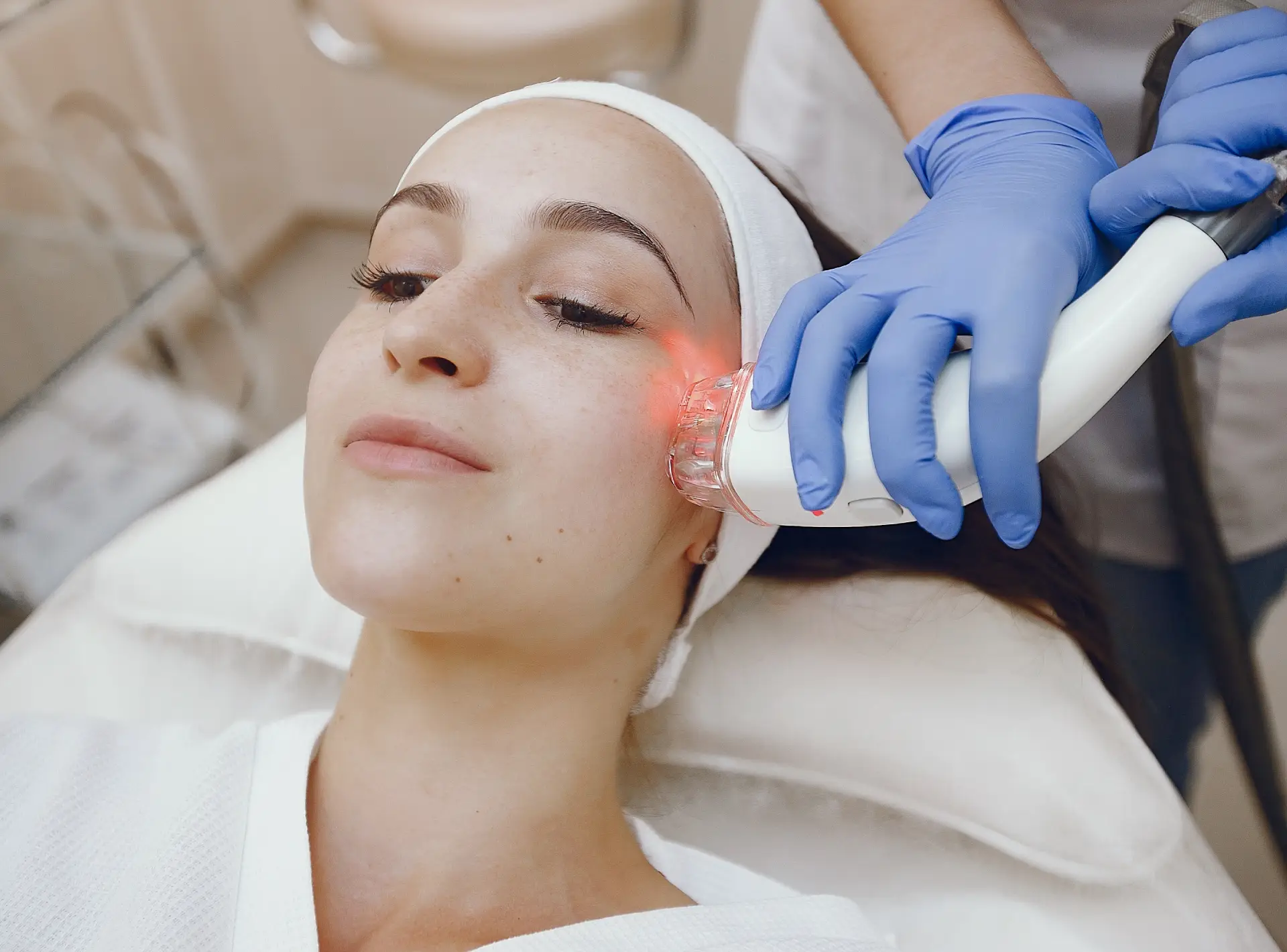
A mainstay of contemporary dermatological and cosmetic procedures is the picosecond laser, sometimes referred to as the Pico Laser. It is well recognized as a flexible and reasonably safe type of laser treatment that addresses pigmented disorders and other issues.
I’ve been using Pico Lasers for years, and I’ve seen their capabilities and limitations. In particular, it’s important to consider the potential drawbacks of a Pico Laser in addition to its potential benefits for your skin.
Is the laser really as safe as everyone says it is? When a side effect occurs, what should you do? More importantly, how do you (or we, as physicians) prevent this treatment’s adverse effects? In this post, let’s find out!
Pico Laser In Dubai
Pico Laser in Dubai is an advanced non-surgical laser treatment used to improve skin tone, texture, and overall appearance. It delivers ultra-short pulses of laser energy to target pigmentation, acne scars, sun damage, age spots, melasma, and unwanted tattoos while minimizing damage to surrounding skin. The treatment also stimulates natural collagen production, helping to improve skin smoothness, reduce fine lines, and enhance skin rejuvenation. Because the laser energy is delivered in extremely brief bursts, Pico Laser treatments are known for their precision, effectiveness, and minimal downtime. Suitable for various skin types, Pico Laser can help patients achieve clearer, brighter, and more youthful-looking skin with a customized treatment plan tailored to their individual concerns.
Pico Laser Principles
The idea behind how the Pico Laser works is that light energy can alter our skin and tissues. The disintegration and eventual removal of pigments is the transformation we are all looking for. For this reason, pigmented conditions like freckles, sun spots, melasma, and acne scars are reported to be improved by the Pico Laser.
The fact that the flash of light only lasts for a very brief period of time is crucial to the operation of a pico laser and the source of its name. In other words, a few picoseconds. A picosecond is equivalent to a trillionth of a second. You try to see if you can turn on your flashlight for even a fraction of a second.
What is the purpose of shining such a brief burst of light on the skin? The technology that concentrates all of the light energy from a very strong laser beam into that brief pulse holds the key to the solution.
Devastating burns would result from a laser using the same strength and shining it on the skin for a longer period of time. However, pigments in our skin cells begin to degrade when a high peak power (more than a billion watts) is employed in a Pico Laser, albeit in a minuscule fraction of a second, without the extra heat. This minimizes collateral damage to healthy tissue and other cells. Here, we just come into contact with the pigments.
This is the essence of how immense power can nevertheless result in great safety. Make use of an extremely potent laser, but only flash the light for a very little amount of time.
What Are the Side Effects of Pico Lasers?
What is the danger, and what might go wrong if the technology were created with safety in mind from the beginning?
Post-inflammatory hyperpigmentation (PIH) is one of the more frequent adverse effects. This condition causes the laser-treated areas to darken following the operation. To be clear, I won’t claim that it is a typical adverse effect in general. What I meant to say was that, out of all the possible side effects, this is probably the most common.
This occurs when the skin is overly inflamed, and inflammation stimulates the formation of pigment. Usually, the irritation would happen if the laser was too powerful for the skin.
Naturally, this is bad news: you’re receiving the opposite outcome of what you came for. You ended up with more pigment than the Pico Laser was supposed to lighten and eliminate. The good news is that this side effect is typically curable and reversible.
So why does this occur? I claim that overtreating is frequently the cause. This could indicate either too many rounds or too much laser power (fluence). And why would this occur? Once more, there are a few potential explanations: the patient and physician are in a rush, wanting to see significant improvements in as few (1-2) sessions as feasible.
Everything has a drawback. You know what happens if you try to cook an egg with a flamethrower instead of frying it in a skillet or boiling it? It would be finished in a matter of seconds, but it would burn black and become unfit for consumption. This is a straightforward example to show how the skin could potentially meet a similar end.
Thus, the first lesson is to avoid having irrational expectations that years of pigmentation will be resolved in one or two sessions. Honor the body’s biochemical and cellular functions. Strong laser settings can seem to make a significant difference in just one session, as experienced physicians have witnessed. However, such a shift may be extremely favorable (pigments disappear) or extremely unfavorable (pigments get worse!)
If you’re paying for your laser, I think it’s far preferable to obtain a minor result (don’t be avaricious) and let your skin—not the doctor—recover and lose color naturally. It’s definitely far more prudent to avoid taking a chance on nature by asking for an excessively potent laser treatment, only to discover that you paid for the laser to darken your skin.
BOOK AN APPOINTMENT TODAY
How To Solve Laser PIH?
Therefore, don’t be too depressed if you are unlucky enough to develop post-laser PIH. I’m not proposing that doctors should cause this problem; rather, I’m stating that there is yet hope.
First of all, PIH is usually transient. Even the pigments produced by the laser therapy have a tendency to metabolize and disappear with time. Skincare products and whitening creams can assist in expediting this process. Examples include niacinamide, a kind of vitamin B3, and AHAs, which are acids that gently exfoliate the skin. The whitening impact of whitening creams like Triluma and Cyspera might be more noticeable.
The darkening and PIH can then be improved by additional lasers. What? More lasers to fix a laser-related issue? In all honesty, this is a legitimate response. However, your doctor ought to already be aware that your skin is sensitive and dislikes laser settings that are too intense. Therefore, the best course of action in this situation would be to gradually remove those pigments. Although it may take some time, it is much preferable to making the same error repeatedly by being pushy with the settings.
Overall, it’s not about squandering time on pointless laser treatments. In every skin, there is just a boundary that we cannot cross. While some persons with fairer skin have a higher threshold for paradoxical laser darkening, others have a lower threshold.
As we often say, prevention is preferable to treatment. Because of this, it is still crucial to have faith in a skilled physician who understands when enough is enough. Patients have asked me, “Why is my face not red after the laser? Why am I not scabbing?” I want to make it clear to everyone that there are other ways to achieve positive outcomes besides scabbing following the Pico Laser.
Conversely, by the time the face is quite red and doesn’t go away for days, it’s a formula for catastrophe, and the kind of outcomes you would anticipate include PIH and unfavorable outcomes.
What Can I Do At Home After a Pico Laser?
It’s critical to focus on post-laser care in addition to the doctor’s vigilance in the clinic, which includes skin analysis and laser treatment process optimization.
I’ll really use this time to mention that I’ve seen some patients disregard post-laser best practices and suffer the repercussions. While some first refused to confess, preferring to place the responsibility on the doctor and the laser (until I found out), others have acknowledged doing some things that went against my advice.
In any case, it should go without saying that using sunscreen after a laser is the first and most important regulation. I’m not talking about just once or twice. I mean on a regular basis. For the first week, avoid direct sunlight. For a few days, stay away from “active” skincare products, which are essentially substances like acids and retinoids that are intended to actively treat skin conditions.
In my practice, I’ve had someone perform her own at-home microneedling procedure over a specific area of her face in between lasers, causing trauma and injury to a skin trying to heal from my laser. When she returned, she asked me why the patch she had needled darkened, seemingly implying that the laser was to blame. Another patient had darkening after neglecting to avoid acids in her skincare regimen. The skin produced additional pigments as a result of the extended inflammation that followed.
This teaches us that no matter how cautious the doctor is, there are still things outside of our control. And in order to guarantee a seamless and secure recuperation, everyone who is genuinely interested in improving their general skin condition—to the extent that they have enrolled in Pico Lasers—must do their share.
In any event, it’s important to remember that Pico Lasers typically have a low rate of complications, including PIH. Therefore, it’s safe to speak with a qualified physician about your treatment options, including Pico Lasers, if you want to address your pigmentation.
Advantages Of Pico Laser You Should Know
Pico Laser offers advanced skin rejuvenation by targeting pigmentation, acne scars, sun damage, and uneven skin tone with minimal downtime. The treatment uses ultra-short energy pulses to promote healthier-looking skin while preserving surrounding tissue. At Perfect Doctors Clinic, Dr. Perfect Celebrity provides customized Pico Laser treatments designed to deliver clearer, smoother, and more radiant skin.
MEET THE EXPERT DOCTOR
Why Pico Laser Is The Best Solution
Pico Laser is considered one of the most effective solutions for treating pigmentation concerns, acne scars, and unwanted skin discoloration. Its advanced technology breaks down pigment particles efficiently while stimulating skin renewal. At Perfect Doctors Clinic, Dr. Perfect Celebrity tailors each treatment plan to achieve natural-looking improvements and long-lasting skin rejuvenation results.
How Pico Laser Restores Confidence And Appearance
Pico Laser helps improve skin clarity, texture, and overall appearance by reducing visible imperfections that may affect self-confidence. Patients often notice smoother, brighter, and more even-toned skin after treatment. At Perfect Doctors Clinic, Dr. Perfect Celebrity uses advanced Pico Laser technology to help patients achieve refreshed, youthful-looking skin and renewed confidence.
Best Aesthetic Clinic In Dubai For Pico Laser
Best Aesthetic Clinic in Dubai for Pico Laser provides advanced skin rejuvenation treatments designed to improve skin tone, texture, clarity, and overall appearance with minimal downtime. At Perfect Doctors Clinic, patients receive personalized Pico Laser treatments tailored to their unique skin concerns and aesthetic goals. The procedure is commonly used to address pigmentation, acne scars, sun damage, uneven skin tone, and other visible imperfections while promoting healthier-looking skin. Using advanced laser technology and a patient-focused approach, the treatment helps stimulate natural skin renewal for smoother, brighter, and more youthful-looking results. Every treatment plan is carefully customized to ensure safety, comfort, and optimal outcomes. From consultation to follow-up care, patients receive comprehensive support to help achieve clearer, more radiant, and confident-looking skin.