





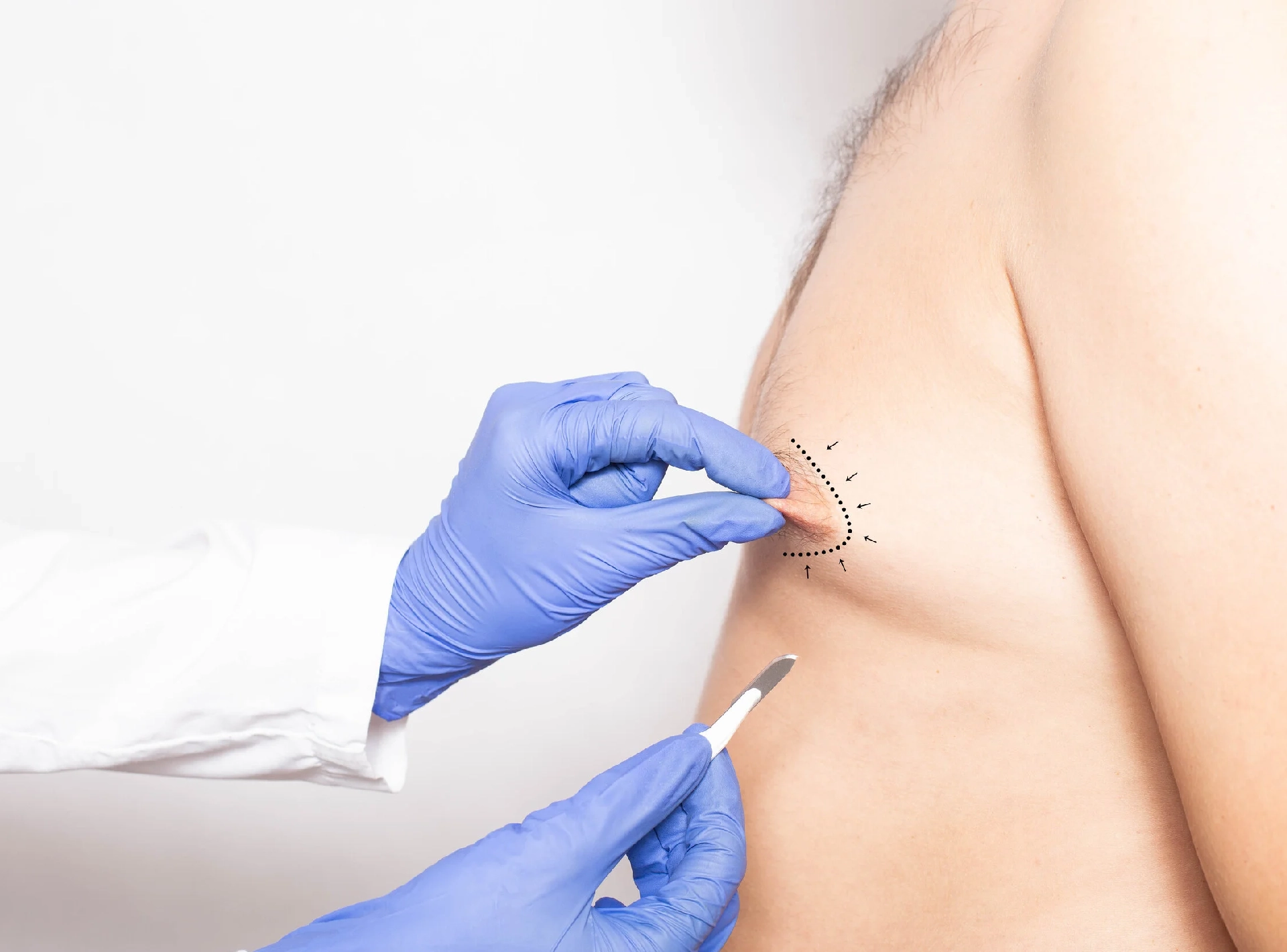
Before having any kind of plastic surgery, consulting with a licensed board-certified plastic surgeon can help determine the best course of action. By providing you with the right information about scar treatments, your surgeon can help you get ready for a healing process that will leave you with few scars.
Males with gynecomastia have enlarged breast tissue. This excess breast tissue or chest fat can significantly impact one’s self-esteem. Although male breast reduction surgery will provide both physical and psychological relief, a greater degree of satisfaction will depend on how well the gynecomastia surgery scars are managed.
Now let’s shed some light on the topic of scarring to better prepare you for the road ahead.
Gynecomastia Surgery In Dubai
Gynecomastia surgery in Dubai is a surgical procedure designed to reduce excess breast tissue in men, creating a flatter, firmer, and more masculine chest appearance. It typically involves liposuction, excision of glandular tissue, or a combination of both to remove fat and glandular tissue. The procedure helps improve body proportions, boost self-confidence, and address discomfort caused by enlarged male breasts, with recovery usually involving temporary swelling, bruising, and a gradual return to normal activities. Dubai offers state-of-the-art clinics with experienced plastic surgeons who provide personalized treatment plans, ensuring optimal results, minimal scarring, and a safe, comfortable surgical experience for each patient.
Factors That Impact Scarring
The impact of potentially serious scarring after a male breast reduction procedure depends on a number of individual factors.
When treating gynecomastia, every patient experiences some variances. How a scar heals depends on a number of personal factors. Here are some things to think about:
Genetics
How scars develop and heal is greatly influenced by an individual’s inherited skin traits. Genetic factors may predispose some individuals to wide, pigmented, or elevated scars.
Wound Type And Size
The nature and size of the wound or incision can influence the resulting scar. Tiny incisions or shallower wounds may heal more subtly in the areas where extra fat is removed, whereas large incisions or deeper wounds may leave more obvious scars.
Location Of The Scar
Scars that occur at an incision site over joints or areas of high tension are more prone to widening or becoming raised due to increased stress on the healing tissue. Conversely, scars in areas with less movement and tension may heal more discreetly.
Age
Compared to older people, younger people often heal more quickly and may have less noticeable scarring. This is because younger skin produces more collagen and is more elastic, which promotes better scar formation and faster skin healing.
Skin Color And Type
People with darker skin tones are more prone to developing hyperpigmented scars, while those with fair skin may experience more noticeable redness or hypopigmentation. Additionally, keloid or hypertrophic scars may be more common in people with oily or acne-prone skin.
BOOK AN APPOINTMENT TODAY
Types Of Scars From Gynaecomastia Surgery
There are several types of scars that can result from gynecomastia surgery. The surgical method employed, the scope of the cosmetic procedure, and personal characteristics like skin type and healing capacity all influence the kind of scar that results. Here are the most common types of gynecomastia plastic surgery scars:
Vertical Scars
In some cases, particularly when excess breast tissue or skin needs to be removed, a vertical incision may be made extending from the bottom edge of the areola to the crease of the chest. Although this kind of scar is more noticeable than peri-areolar scars, it is frequently hidden by clothing.
Horizontal Scars
Horizontal incisions may be made along the inframammary fold, a crease in the chest, in cases of severe gynecomastia or when large amounts of skin need to be removed. Although they can frequently be concealed under clothing, horizontal scars are usually longer and more noticeable than peri-areolar or vertical scars.
Peri-Areolar Scars
This kind of scar is most frequently linked to gynecomastia surgery. An excision tool is used to make an incision around the periphery of the areola, the pigmented region that surrounds the nipple. Because they are usually well hidden within the areola’s natural border, peri-areolar scars are less obvious.
Combination Scars
Depending on the specific characteristics of the gynecomastia and the surgical approach chosen by the plastic surgeon, a combination of different types of scars may be used. For example, a patient may have both peri-areolar and vertical incisions to achieve the desired outcome.
Managing Gynecomastia Scars
Complete removal is uncommon, but scar tissue management can greatly improve the appearance of surgical scars.
Patients with gynecomastia should be aware that scars fade and get better over time and are a normal part of the healing process.
Following your surgery, you can reduce visible scarring by adhering to the following guidelines:
- To encourage appropriate healing and little scarring, carefully adhere to the post-operative care instructions.
- Steer clear of too much sun exposure because UV rays can make dark scar tissue more noticeable.
- To soften and flatten scar tissue, massage scars frequently with silicone gel or vitamin E oil.
- To reduce scars under the supervision of a licensed dermatologist or plastic surgeon, think about scar treatments like laser therapy, steroid injections, or microneedling.
- Adopt scar camouflage strategies to hide scars while they heal, such as makeup or specialized apparel.
- Make use of scar gels and silicone sheets. In order to guarantee smooth scars, silicone hydrates the scar tissue and reduces the production of excess collagen. Scar gel will help the skin heal faster and keep the area around the incision moist.
- Keeping your newly contoured chest clean will help to prevent infection and encourage healing.
MEET THE EXPERT DOCTOR
Gynecomastia Surgery FAQ’s
How Long Does It Take To Recover From Gynecomastia?
Depending on the amount of tissue removed from the male breasts, the recovery period after surgery varies, but post-operative instructions are always the same. A recovery period of four to six weeks is typically anticipated.
Are Gynecomastia Scars Noticeable?
For the majority of patients, very small incisions are made discreetly around the nipple using a very thin excision device, leaving hardly noticeable scars after healing. Although larger incisions can result in more noticeable scars, they are typically not required in gynecomastia surgery.
How Long Do Gynecomastia Scars Last?
As time passes, swelling diminishes and scar visibility will gradually fade. The majority of patients’ altered appearances tend to get better over time. It may take three to six months for the full effects of gynecomastia surgery to become apparent. Despite being permanent, incision lines in male breast tissue will eventually fade.
How Painful Is Gynecomastia Surgery Recovery?
For the first three days following your gynecomastia surgery, you may feel some soreness, but usually not much. Although it usually goes away in a few weeks to months, there may be a brief loss of feeling in the treated area.
Do Skin Tightening Treatments Leave Scars?
Excess skin tightening can be an important aspect of gynecomastia treatment, especially in cases where there is excess and saggy skin remaining following the removal of excess glandular tissue and excess fat.
Usually, liposuction and/or surgical excision are used to remove extra breast tissue and fat during male breast reduction surgery. However, in certain instances, particularly if they are severe or linked to significant weight gain, the skin may have lost its elasticity and may not contract sufficiently following the removal of fatty tissue.
In such cases, additional surgical techniques, such as skin tightening or excision of excess skin, may be necessary to achieve a smooth, natural-looking chest contour. Careful assessment by an experienced plastic surgeon is essential to determine the most effective approach, ensuring both aesthetic results and long-term satisfaction. Proper post-operative care, including compression garments and gradual physical activity, also plays a crucial role in optimizing healing and maintaining the improved chest shape.
Best Plastic Surgeon In Dubai For Gynecosmastia Surgery
Best Plastic Surgeon In Dubai for Gynecomastia surgery offers expert care for reducing excess male breast tissue and creating a firmer, more masculine chest contour. Many patients seek out Dr. Perfect Celebrity, a highly regarded aesthetic surgeon known for his meticulous technique and natural-looking results. He provides comprehensive consultations, precise surgical techniques, and personalized aftercare to ensure a smooth recovery and long-term results that restore confidence and improve overall body proportions. With access to advanced medical facilities, the latest surgical technology, and a patient-centered approach, Dr. Perfect Celebrity ensures every procedure is safe, effective, and tailored to meet individual aesthetic goals, helping patients achieve a balanced, confident appearance.
Choose The Right Gynecomastia Surgeon
Prior to your cosmetic procedure, one of the most crucial choices you can make is to work with a board-certified plastic surgeon like Dr. Perfect Celebrity. In order to properly evaluate you and meet your needs, he will be able to answer all of your questions and evaluate your natural contours. By providing a personalized treatment plan, explaining the procedure in detail, and setting realistic expectations, he ensures a safe, comfortable experience and results that enhance your appearance while maintaining natural harmony and balance.
To schedule your initial consultation for gynecomastia and learn why, get in touch with us at Perfect Doctors Clinic in Dubai.