





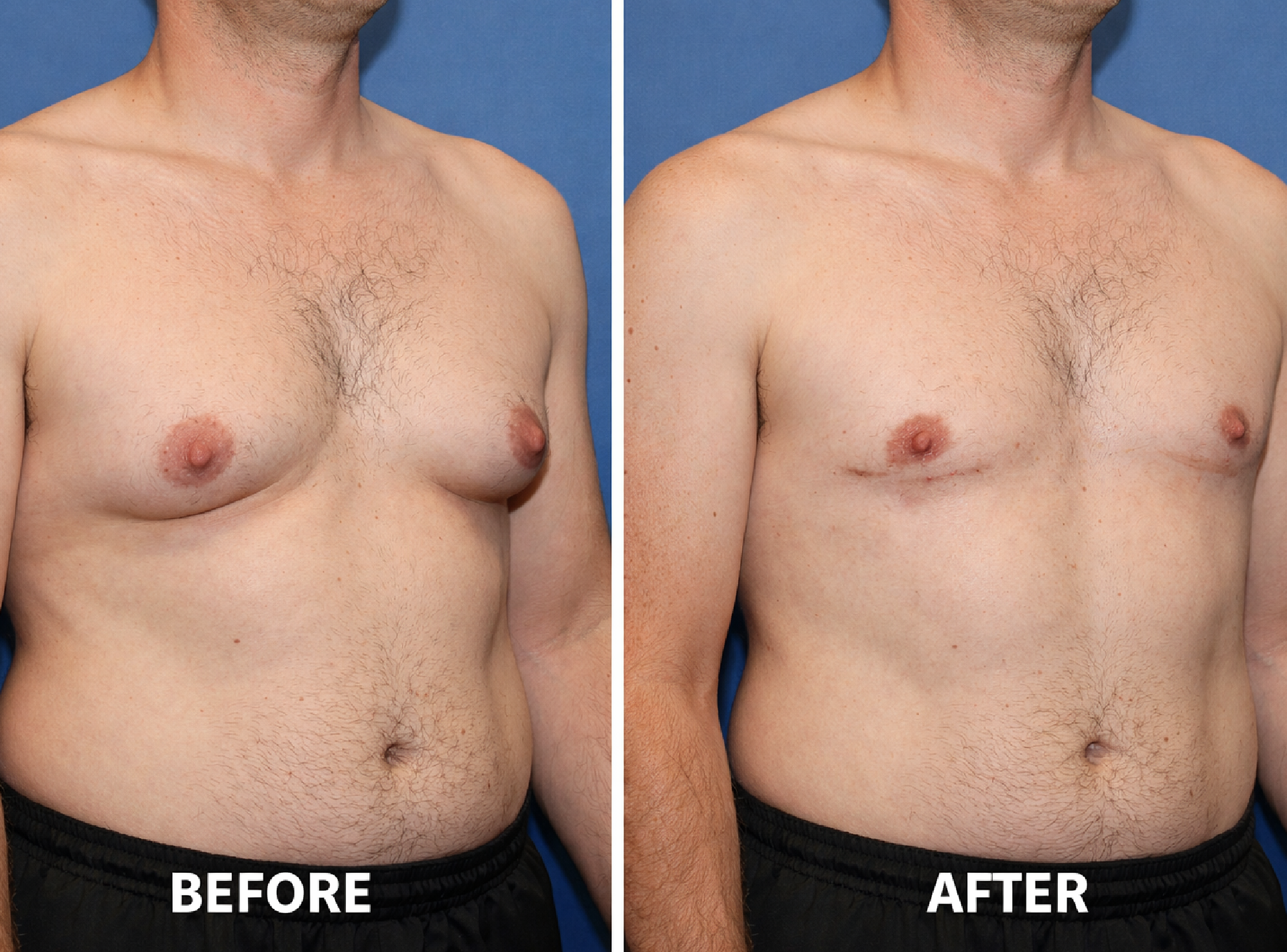
A blood test for gynecomastia is an important step in understanding the causes of male breast enlargement. At Perfect Doctors Clinic in Dubai, we perform detailed blood analyses to identify hormonal imbalances, underlying medical conditions, or other contributing factors. These tests ensure that each patient receives a personalized treatment plan for the best and most lasting results.
Gynecomastia In Dubai
Gynecomastia in Dubai frequently involves detailed blood tests to evaluate hormonal imbalances that contribute to male breast enlargement. Testosterone, estrogen, thyroid function, and liver enzyme levels are analyzed to ensure a comprehensive understanding of each patient’s condition. These results help surgeons determine whether gynecomastia is due to hormonal disruption, medication use, or other medical causes. By addressing the root cause along with surgical intervention, patients achieve more effective and permanent chest improvement, reducing the likelihood of recurrence and ensuring harmonious body proportions.
What Is A Blood Test?
Your examination may include doing certain blood tests, such as measuring different blood chemistries and signs of inflammation, as well as cell counts. We can check your blood for a lot of things, like salts, blood cell counts, and heart-specific protein indicators like BNP. Blood chemistries, tests of liver and kidney function, and genetic investigations are some of the other procedures that may be done. In some circumstances, it may be a good idea to get genetic testing. We may also ask you to join our ongoing studies by letting us take some of your blood and storing it for further analysis.
Medical History And Physical Examination
Taking a medical history and completing a thorough physical exam are the first steps in making a diagnosis.
First, you need to look at the following things: whether both breasts are affected, how old the person is, how long the condition has been going on, how the swelling is becoming worse, any other symptoms, and whether the person is taking any medications.
People with hormonal disorders often come in with gynecomastia that affects both breasts.
Adolescent males in puberty and older men may also exhibit gynecomastia.
In boys, the symptoms frequently resolve spontaneously without intervention.
It’s also vital to ask questions to see if the adult patient with gynecomastia is growing and developing other secondary sexual characteristics properly. Low testosterone levels may be indicated by symptoms of diminished libido or erectile dysfunction.
Progression Of Gynecomastia
You need to know if the swelling is getting bigger, smaller, or staying the same.
Rapid growth of breast tissue may indicate an underlying malignancy.
Many drugs and medications can cause gynecomastia. It may be crucial to know about these drugs and when to stop taking them.
If the condition improves upon cessation of the medication, the causative link between the drug and Gynecomastia may be substantiated.
Other Diseases And Gynecomastia
The doctor would ask the patient about other illnesses that can cause gynecomastia. This includes asking about liver, kidney, malnutrition, and thyroid diseases. For example, chronic weight loss, fatigue, anorexia, jaundice, skin changes, pallor, hair loss (which can be a sign of malnutrition), easy fractures (which can be a sign of hormonal deficiencies), heat intolerance, and diarrhea (which can be a sign of an overactive thyroid).
A physical exam is helpful for finding alternative reasons of gynecomastia. The doctor might check:
- General physical well being
- Skin
- Neck for goitre (indicative of hyperthyroidism)
- Abdomen for liver enlargement, ascitis (in liver diseases) etc.
We would carefully look for changes in patterns, tumors, masses, and developmental problems in the secondary sexual characteristics, such as pubic hair, axillary hair, the penis, and the testes. The axially is also evaluated to see if the lymph nodes have grown.
True Gynecomastia And False Gynecomastia
When the breast is examined, it is tested to see if the enlargement is fatty tissue (not real Gynecomastia) or breast tissue.
If this is the case, the feeling between the thumb and forefinger is gentle and doesn’t meet any resistance from an intervening bulk until the nipple is reached.
If you really have gynecomastia, you can feel a lump between your fingertips.
Gynecomastia Tests
Tests may be ordered at times. These tests check hormone levels. Testosterone and estrogen levels in the blood may provide us some information about hormone levels that are out of balance and may have caused gynecomastia.
Other hormones, including LH (Luteinizing Hormone), FSH (Follicle Stimulating Hormone), and human chorionic gonadotropin (hCG), may also be prescribed.
It may be necessary to have an ultrasound of the breast. This is especially crucial if you have a lump in your breast that is only in one place. It could also signal that there is a boil or abscess that has caused the breast to enlarge.
Because long-term liver and renal dysfunction can cause gynecomastia in males, tests that check liver and kidney function may find problems with those organs.
You may require a mammogram to rule out breast cancer.
If doctors think that tumors or problems with other organs are causing the gynecomastia, they may suggest further tests including chest X-rays, computerized tomography (CT) scans, or magnetic resonance imaging (MRI) scans.
Testicular ultrasounds and sometimes biopsies can be used to check for malignancies and tumors in the testes. If doctors can’t find a cause for the gynecomastia, they may need to do all the tests again after six months.
BOOK AN APPOINTMENT TODAY
What Does Gynecomastia Look And Feel Like?
Most of the time, gynecomastia appears and feels like a button-sized bump under your nipple. You might be able to see this as a lump in your breast or feel it when you press on the area. The lump may be easy to move about in the breast tissue and may hurt when you touch it. You might feel lumps or swelling in one or both breasts.
If you are overweight, you may get larger breasts because of too much fat tissue (pseudogynecomastia). This appears like a general growth in breast size, not a lump.
It’s also crucial to remember that breast cancer in men can also develop a lump in your breast tissue. Gynecomastia is substantially more common than male breast cancer. But it’s important to see your doctor for a physical exam that can assist tell the difference between the two. Your provider may sometimes order more imaging tests.
What Is The Treatment For Gynecomastia?
Some people don’t want or need to get treatment for gynecomastia. But if you do, your doctor may suggest a few various ways to deal with it, depending on your situation:
- Stopping or switching a medication: If a drug or other substance is producing gynecomastia, your doctor may tell you to stop taking it or switch to a different one. Tell your doctor about any over-the-counter drugs you take, such as herbal and dietary supplements. You should never stop taking a prescription drug without talking to your doctor first.
- Underlying condition treatment: If a tumor or hypogonadism is the reason, treating the condition may also help gynecomastia.
- Gynecomastia surgery: Some people choose to have surgery to reduce extra breast tissue for gynecomastia (male breast reduction). This is a cosmetic procedure that you can choose to get.
Does Gynecomastia Go Away?
Gynecomastia is usually only temporary for babies and teens. It goes away when your hormones get back to normal. If you have low testosterone levels for a long time, gynecomastia may not go away on its own.
When you have gynecomastia, days might feel like weeks, especially if it changes how you see yourself. If you’re worried about how long you’ve had gynecomastia or it’s making you feel bad, talk to your doctor.
Can Gynecomastia Go Away With Exercise?
If you have pseudogynecomastia because you are overweight, losing weight may help. And working out can help you lose weight.
Exercise probably won’t help if you have gynecomastia because of a hormonal imbalance. This is because an imbalance of estrogen and testosterone causes your breast tissue to grow, and exercise can’t change that.
Can I Prevent Gynecomastia?
Sadly, there isn’t much you can do to stop a lot of the hormone changes that lead to gynecomastia. You may be able to lower your risk of gynecomastia by switching drugs or getting help for a substance use issue.
When Should I See My Healthcare Provider About Gynecomastia?
Talk to your doctor if gynecomastia is bothering you or if you have any other new symptoms. They can find out whether a medical problem is to blame and talk about possible treatments.
What Questions Should I Ask My Provider?
You might wish to question your doctor:
- What caused my gynecomastia?
- Do I need to change any of my medicines?
- What is the best way to treat gynecomastia?
- How long will gynecomastia last?
- What can I do to stop getting gynecomastia again?
- Should I get checked for breast cancer?
- Should I look for symptoms of problems?
MEET THE EXPERT DOCTOR
Best Plastic Surgeon In Dubai For Gynecomastia
Best Plastic Surgeon in Dubai for Gynecomastia combines thorough medical evaluation with surgical expertise. Dr. Perfect Celebrity tailors the approach according to lab findings, ensuring that both fat and glandular tissue are treated effectively. With advanced techniques, precise contouring, and careful post-operative care, patients gain a firmer, masculine chest that looks natural and balanced. The procedure also improves posture, confidence, and physical comfort, offering a holistic transformation.