





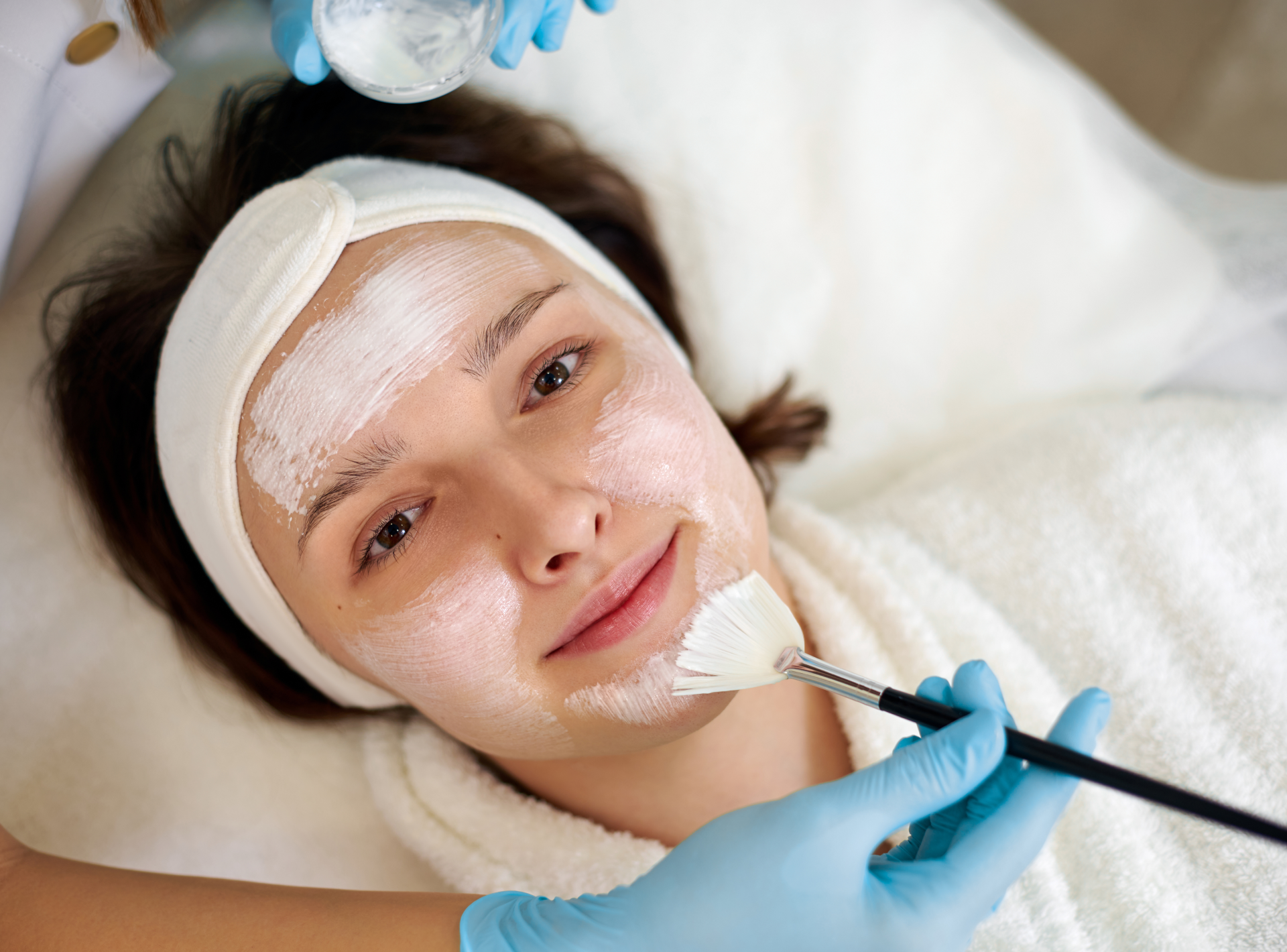
Chemical peels are among the most popular minimally invasive skin rejuvenation procedures today. Peels can be customized for the individual patient’s needs. There are peels to stimulate collagen production, clear acne/blemishes, deal with pigmentation issues (even skin tone), and smooth even the roughest of skin.
Chemical Peels In Dubai
Chemical Peels in Dubai offer a professional approach to improving the appearance and texture of the skin. A consultation at Perfect Doctors Clinic helps them figure out if a chemical peel is right for your skin type, concerns, and results you want before you get it done. Dr. Perfect Celebrity may look at your skin and talk to you about things like how sensitive it is, what treatments you’ve had in the past, what skin care products you’re using now, and any current skin problems. Patients may be told to follow certain preparation instructions to help keep their skin from getting irritated and make the treatment go more smoothly. A carefully chosen peeling solution is put on the skin during the procedure. The solution works by getting rid of damaged top layers of skin and encouraging it to show a newer, more even surface. Depending on the type and strength of the peel, you might feel warm, tingly, tight, or slightly uncomfortable for a short time. The process of treatment is tailored to each person’s skin needs. As the skin renews itself after treatment, it may look red, sensitive, dry, or flaky for a short time. It’s important to follow the skincare instructions given after treatment to protect the area that was treated and help it heal properly. Skin care products that are gentle, enough water, and consistent sun protection can help the skin stay healthy while it heals. With personalized care at Perfect Doctors Clinic, chemical peels can be a part of a good skin care plan that aims to make skin look smoother, clearer, and more refreshed.
If you are considering a chemical peel, here is what to expect before, during, and after treatment.
What Is A Chemical Peel?
A chemical peel is a skin resurfacing procedure that uses a chemical solution, usually acidic, to exfoliate the top layers of skin. Chemical peels can be light and superficial or deeper depending on the type of formula used.
Chemical peels are usually glycolic acid, salicylic acid, lactic acid, or retinoic acid. You’ll see these same ingredients in a lot of your favorite skin care products. During a chemical peel treatment, the solutions used are stronger.
What Skin Conditions Can A Peel Treat?
Chemical peels can improve skin texture and tone. They make the skin smoother, tighter, and more glowing and youthful. Chemical peels are generally individualized to address one or more of the following conditions:
- Fine lines & wrinkles
- Acne, scarring, or other marks
- Hyperpigmentation
- Excessive production of sebum
Chemical peels can be performed on the neck, chest, or hands, as well as on the face, where they are most commonly done.
How Is A Chemical Peel Performed?
There are many options for your chemical peel, each going to a different depth depending on the sensitivity of your skin type and the results you want. You and your provider will decide together what is best for you during your consultation.
This is a professional chemical peel (not as strong as an at-home peel) done in-clinic, and you will go home the same day. During your peel, you will be lying face up with your eyes protected. You can apply a neutral gel or protectant around your eyes and lips to prevent the chemicals from reaching there.
If you choose to have a deep peel, you might be given some relaxing pain medication prior to the procedure.
Then, the liquid peel is applied to your face with a brush, a cotton applicator, or a spatula. First the thickest skin areas, like the forehead, nose, cheeks, and chin, are treated. Then the liquid is spread to other areas.
When the treatment is complete, you can remove the peeling agent by using a cool or neutralizing wash.
BOOK AN APPOINTMENT TODAY
Preparing For Your Chemical Peel
Your provider will give you a list of recommended do’s and don’ts ahead of your chemical peel. These preparatory steps help thin the top layer of skin, allowing your chemical peel to penetrate more deeply for better results. These tips also help to minimize the risk of scarring or hyperpigmentation.
Your provider will likely advise:
Avoid Sun Exposure
Avoid sun exposure as much as possible for ten days after your peel and use a daily sunscreen. This will help to lower the chances of staining.
Avoid Waxing
Do not have facial waxing, electrolysis, or other depilatories for one week before your treatment.
Avoid Excess Exfoliation
Discontinue prescription acne medications and retinol products such as Retin-A and strong AHA or BHA products at least seven days before your chemical peel.
Avoid Aspirin & Advil
Avoid taking aspirin or other non-steroidal anti-inflammatories like Advil the week prior to your peel.
Hydrate
Drink plenty of water the week prior to your peel, and discontinue any products not listed above that dry your skin.
1 Day Prior
Avoid the gym or sweating excessively for 1 to 4 days before your appointment.
What To Expect During Your Peel
Chemical peels aren’t as relaxing as facials, but the results are better and last longer. While you are peeling, you may experience the following sensations:
Tingling
It’s totally normal to feel tingling and itching during your peel.
Tightness
It’s normal to feel a little tightness or pulling sensation on your skin.
Temperature Changes
You might feel your skin getting hot or cold. Some people feel one way and some people feel another, but either is normal.
If you ever feel too uncomfortable, tell your provider.
What To Expect After Your Peel
Chemical peel: controlled damage to skin to stimulate skin cell turnover. That’s the reason chemical peels have a recovery time. Here is what you can expect during this period:
- Your skin can be red or discolored, especially if you have a light complexion, a few days after your peel.
- You might get a few small whiteheads—but the result is not a breakout. Let them be and they’ll sort themselves out.
- You may experience flaking, peeling, or shedding generally three days post your procedure. The purpose is to avoid the risk of permanent hyperpigmentation.
- Your skin can feel tight or dry. This condition is a normal reaction, which will resolve on its own.
If you notice worsening redness or crusting, call your doctor. Here are some tips to avoid complications and speed up the healing process:
Keep Skin Clean And Cool For 1-2 Days After Treatment
Avoid make-up to keep skin clean. Avoid doing things that could raise your temperature, such as exercising, sweating, or going to steam rooms or saunas. Avoid drinking alcohol and don’t hold hair dryers near your face.
No Manual Exfoliation
Until your skin heals, do not touch your face, pick or peel at loose skin, or try to exfoliate with scrubs, loofahs, or towels. Such actions can cause permanent skin discoloration.
No Chemical Exfoliation
Keep avoiding prescription acne medications, retinols, retinoids, and acidic hydroxy acids for at least ten days while your skin heals.
Moisturize With Care
Do not put ice or cold water on your face. Instead, keep the skin moist. Your provider can recommend a moisturizer to use after your treatment. Apply twice daily or as needed.
Avoid Depilatories
Do not wax; Use electrolysis or other hair removal methods on the area to be treated for at least ten days.
Use Sunscreen
Stay out of direct sunlight until your skin completely heals. If you go out, use sunscreen and protective clothing.
Avoid Additional Treatments
In addition to the above, do not have another chemical peel until your doctor says it is safe.
How Long Do Peel Results Last?
The length of time your peel lasts depends on the strength of your chemical peel, the specific formula used, and your adherence to pre- and post-treatment instructions. Here are the general guidelines:
- Superficial Peels: These mild peels are typically made with salicylic acid or glycolic acid and affect only the top layers of skin. They are without downtime. These peels are good for one to two months.
- Medium Depth Peels: These peels may use trichloroacetic acid and other formulations and go deeper into the skin to remove lines or discoloration. Duration between two and six months
- Deep Peels: These peels are done under a doctor’s supervision and have strong acids that work on deeper lines and skin firmness. Results of a deep chemical peel can last years.
MEET THE EXPERT DOCTOR
How To Make Chemical Peel Results Last Longer
Chemical peels require pre-planning and downtime after the procedure, other than a superficial peel. And the longer you can keep your results, the more worth that time investment is. Here’s the secret for longer-lasting results from a chemical peel:
Follow Instructions
Follow all pre- and post-treatment directions carefully. Allow your skin to heal properly, and most importantly, do not touch your face while it is healing.
Keep Skin Hydrated
Your skin needs hydration, and this requirement is especially true after your peel. Reapply your moisturizer several times a day if needed.
Avoid The Sun
Sun exposure will age your skin even after your chemical peel. Applying sunscreen daily will help your results last longer.
Best Aesthetic Clinic In Dubai For Chemical Peels
Best Aesthetic Clinic in Dubai for chemical peels is Perfect Doctors Clinic, where Dr. Perfect Celebrity provides personalized treatment plans based on each patient’s skin condition, concerns, and aesthetic goals. Chemical peels can help with several skin problems that show up on the surface. Picking the right peel and properly preparing the skin are important for a comfortable treatment and a good outcome. Before getting a chemical peel, a consultation and skin exam help the doctor decide if the treatment is right for the patient. Dr. Perfect Celebrity looks at things like skin type, sensitivity, texture, pigmentation issues, previous treatments, and how you take care of your skin now. Before treatment, patients may be told how to change how they use certain skin care products. Preparing the skin correctly helps it stay in good shape for the procedure and may lower the risk of irritation that isn’t necessary. During treatment, the peeling solution is carefully put on the skin that needs it. Since the solution only touches the skin’s surface, it helps get rid of damaged skin cells and makes the skin look younger. Patients may feel warmth, tingling, tightness, or mild temporary discomfort, depending on the formulation and how sensitive they are. Instead of using the same peel on everyone, the treatment method is chosen based on what the patient’s skin needs. As the skin goes through its renewal process after a chemical peel, it may become temporarily red, dry, sensitive, or peeling. Patients should carefully follow the aftercare instructions that were given to them. Cleaning the skin gently, keeping it moisturized, and protecting it from the sun every day can all help it heal. Avoiding irritation that isn’t necessary and following the skin care routine can also help keep the treatment area in excellent shape. Dr. Perfect Celebrity at Perfect Doctors Clinic focuses on making a personalized plan for each patient instead of using the same procedure on all of them. During the consultation, you can talk about your goals, get a better idea of how the treatment will work, and find out how the chosen chemical peel might fit into your overall skin care plan. If you’re thinking about getting chemical peels in Dubai, a professional evaluation and personalized care can help you get smoother, healthier-looking, and more refreshed skin while making sure that the treatment choices you make are right for your skin.